
 7 Days GolfingTour
 8 Days Group Tour
 8 Days Yunnan Tour
 7 Days Shangri La Hiking
 11 Days Yunnan Tour
 6 Days Yuanyang Terraces
 11 Days Yunnan Tour
 8 Days South Yunnan
 7 Days Tea Tour
 8 Days Muslim Tour
 12 Days Self-Driving
 4 Days Haba Climbing
 Tiger Leaping Gorge
 Stone Forest
 Yunnan-Tibet
 Hani Rice Terraces
 Kunming
 Lijiang
 Shangri-la
 Dali
Dali
 XishuangBanna
 Honghe
 Kunming
 Lijiang
 Shangri-la
 Yuanyang Rice Terraces
 Nujiang
 XishuangBanna
 Spring City Golf
 Snow Mountain Golf
 Stone Mountain Golf



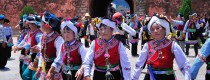








Kaiyangmen Festival of Hani Ethnic Minority in Honghe County, Honghe Prefecture
Basic Introduction
- Chinese Name: 红河县哈尼族开秧门
- English Name: Kaiyangmen Festival of Hani Ethnic Minority in Honghe County, Honghe Prefecture
- Location: 红河县阿扎河乡普春村委会切龙中寨/Qielong Central Village Committee, Puchun Village, Azhahe Township, Honghe County
“Kaiyangmen(开秧门)” is called “Kawopan(卡沃盘)” in the Hani language. Here, “Ka(卡)” means the five grains, “Wo(沃)” means door, and “pan(盘)” means open. This is a traditional and ancient ceremony for Hani villages to welcome the planting season. Before transplanting rice seedlings, the Hani people hold a grand “kaiyangmen(开秧门)” (Opening of the Seedling Door) ceremony in the fields, praying for a bountiful harvest in autumn.This festival embodies the Hani people’s rich traditions and their deep connection to agriculture, particularly rice farming, which is central to their livelihood.
The “Open Seedling Door” ceremony is presided over by a “pima(批玛)” (ritual master) and the Hani elders of the village. As the horn sounds, the Hani elders present steamed yellow glutinous rice and red eggs, and sacrifice a chicken to honor their ancestors and the gods of the land. The ritual master recites prayers to convey the agricultural intentions to the Hani ancestors and the gods of the land, praying for favorable weather, abundant crops, and prosperous livestock. The activities include driving oxen to plow the fields, pulling seedlings, and planting rice seedlings, symbolizing the sowing of happiness and good fortune. Additionally, there are activities like catching fish and collecting eggs, allowing people to personally experience the interesting folk culture of the Hani people.
Key Features of the Kaiyangmen Festival:
- Timing: The festival is typically held before the rice planting season, signaling the important agricultural work that lies ahead. It serves as both a ceremonial and practical preparation for the upcoming farming activities.
- Rituals and Ceremonies: The festivities are presided over by a ritual master known as “批玛” and the village elders. The ceremony includes offerings, such as steamed glutinous rice and red eggs, and a chicken sacrifice, performed to honor ancestors and the gods of the land. These rituals are intended to seek blessings for good weather, a bountiful harvest, and thriving livestock.
- Symbolic Activities: During the festival, various agricultural activities take place that symbolize prosperity and happiness. These may include driving oxen to plow the fields, pulling and planting rice seedlings, and other farming-related tasks. Each of these activities is infused with cultural significance, portraying the Hani people’s relationship with nature and agriculture.
- Cultural Engagement: The festival offers an opportunity for both locals and visitors to engage with Hani culture, featuring traditional music, dance, and games. Activities such as fishing and egg gathering allow participants to immerse themselves in the vibrant local customs.
- Community Importance: The Kaiyangmen Festival is essential for community bonding, reinforcing social ties among villagers. It serves as a time for communal gathering, shared hopes, and collective prayers for agricultural success.


