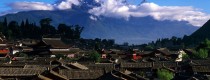
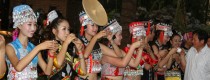
Nestled in Changning County, Baoshan City, Yunnan Province, Youjie Township is a vibrant hub of the Miao ethnic group. The local craftsmanship of Miao traditional costume making, a precious intangible cultural heritage, vividly embodies the Miao people’s wisdom, aesthetic tastes and centuries-old cultural inheritance. It is not just a way of making clothes, but a living carrier of ethnic culture that shines brightly in the land of Yunnan.
The Exquisite Making Process: From Material to Finished Product
Creating a Miao costume in Youjie Township is a labor of love, involving multiple elaborate steps that blend tradition and craftsmanship. Each stage is filled with the Miao people’s reverence for culture and nature.
1. Material Preparation: Rooted in Nature
The foundation of a fine Miao costume lies in careful material selection. Traditionally, the Miao people planted cotton and hemp themselves, spun threads by hand with a spinning wheel, and wove cloth on a traditional wooden loom. The woven cloth is then dyed using 100% natural plant dyes—indigo for deep blue, madder for vibrant red, and turmeric for warm yellow—resulting in rich, earthy tones that are gentle on the skin.
Today, while some modern fabrics are occasionally used for convenience, the core tradition of using natural dyes for key decorative parts is strictly preserved, ensuring the costumes retain their authentic ethnic charm.
2. Embroidery & Decoration: The Soul of the Costume
Embroidery is the most distinctive feature of Youjie Miao costumes, renowned for its exquisite stitches, diverse patterns and bright colors. It is the soul of the craftsmanship, telling stories of the Miao people’s life and beliefs.
-
Traditional Stitches: The main techniques include cross-stitch, satin stitch, chain stitch and cut-pile embroidery, each mastered through years of practice.
-
Cultural Patterns: Every pattern carries profound meanings: Butterfly patterns honor the Miao’s ancestor worship; geometric patterns represent mountains, rivers and fields, reflecting the close bond between the Miao and nature; flower and bird patterns symbolize wishes for a prosperous and harmonious life.
-
Handmade Uniqueness: All embroidery is done by hand. Skilled craftswomen may spend months or even years completing a single set of costumes, making each piece a one-of-a-kind work of art.
3. Accessory Matching: The Finishing Touch
A complete Youjie Miao costume is incomplete without its matching accessories, which enhance its beauty and cultural connotation. Local silversmiths handcraft silver hats, silver necklaces, silver bracelets and other silver ornaments, featuring delicate carvings and a brilliant luster. Paired with embroidered belts and cloth shoes, these accessories not only add elegance to the costume but also serve as a symbol of the Miao’s cultural identity.
Cultural Significance: A Living Heritage
The Miao costume making craftsmanship is passed down from generation to generation, mostly from mothers to daughters, through oral instruction and hands-on practice. On important ethnic occasions—such as the Miao New Year and the Lusheng Festival—local Miao people dress in these finely made costumes, singing and dancing to showcase the unique charm of their culture to the world.
Inheritance & Development: Ancient Craft Meets Modern Times
In recent years, with increasing attention to intangible cultural heritage protection, local governments and cultural institutions have taken various measures to promote this craftsmanship: setting up training classes to teach young people the skills, organizing exhibitions to display the costumes, and integrating the craft into tourism development.
These efforts have breathed new life into the ancient craftsmanship, allowing it to be appreciated and cherished by more people from home and abroad.