Yunnan Guide
  • Yunnan Guide
  • Travel Tips
  • Tour Planing
  • Ethnic Culture
  • Yunnan Climate
  • Golf Courses
  • Travel Articles
  • Yuanyang Rice Terraces & Hani Culture Travel Guide

    10/10/2026•Crazy Jone•23931 words•About 80 minutes

    Quick Answer: Why Are the Yuanyang Rice Terraces Important to Hani Culture?

    Yuanyang Rice Terraces Hani culture is a living mountain system rather than a scenic monument. Hani communities developed villages below water-conserving forests and above irrigated terraces, using channels to move spring water through cultivated slopes. Families still maintain fields, houses, water-sharing practices and community traditions within this landscape. Travelers understand it best by combining a viewpoint with a village, a guided walk or farming explanation, and respectful observation of contemporary life. Allow two or three days, keep sunrise and sunset plans flexible, and never enter homes, fields or sacred areas without permission.

    Key Takeaways

    Yuanyang rewards travelers who look beyond a single sunrise photograph and understand the terraces as working farmland.

    ✓ See the complete system: forests, water, villages and terraces function together rather than as separate attractions.

    ✓ Allow two or three days: one clear morning is never guaranteed in a landscape shaped by fog, cloud and mountain weather.

    ✓ Use Duoyishu for sunrise: its eastern-valley aspect makes it the classic dawn choice, subject to visibility.

    ✓ Use Bada for broad sunset views: the western light reveals the scale of the cultivated slopes when clouds cooperate.

    ✓ Treat Laohuzui as unconfirmed: current 2026 sources conflict on visitor access after landslide damage and restoration work.

    ✓ Add village context: Qingkou and Azheke answer cultural questions that a distant viewpoint cannot.

    ✓ Protect the fields: terrace walls, irrigation channels and planted plots are agricultural infrastructure, not photography platforms.

    Why Visit Yuanyang for Hani Culture?

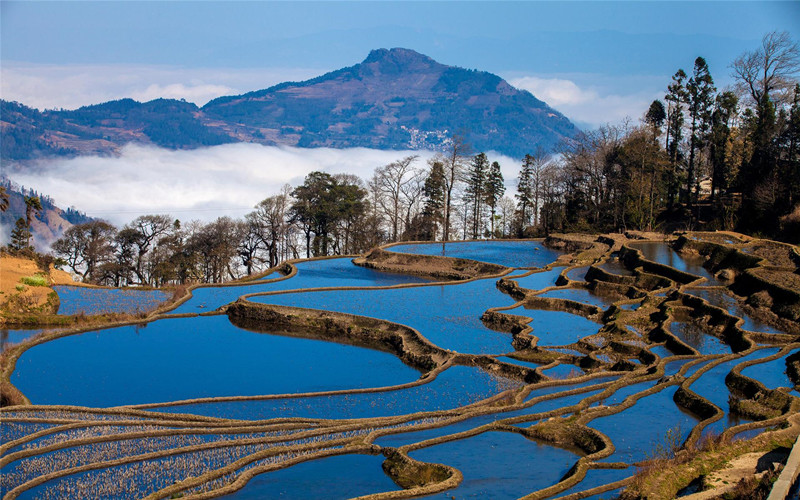
    Yuanyang Hani Rice Terraces reflecting dawn lightYuanyang Hani Rice Terraces reflecting dawn light
    Hani village and irrigated rice terraces in YuanyangHani village and irrigated rice terraces in Yuanyang

    Yuanyang Rice Terraces Hani culture connects dramatic mountain scenery with active farming, village life, water management and contemporary community tourism.

    At dawn, fog drifts through the Ailao Mountains (哀牢山) while flooded plots catch fragments of pink or silver light. Later, the same slopes become workplaces: water moves through channels, residents tend fields, market goods change hands and village lanes return to ordinary rhythms.

    Yuanyang County (元阳县) lies in Honghe Hani and Yi Autonomous Prefecture (红河哈尼族彝族自治州), southern Yunnan (云南). The landscape includes Hani (哈尼族), Yi (彝族) and other communities, so travelers should not label every village, market or person from appearance alone.

    UNESCO inscribed the Cultural Landscape of Honghe Hani Rice Terraces in 2013. Its value rests on a still-functioning relationship among forest, water, settlement, cultivated terraces and community institutions—not on one famous viewpoint.

    For a province-wide comparison with Naxi, Mosuo, Dai and other communities, use the planned Yunnan ethnic minority travel guide.

    Yaso Trip can combine viewpoint timing with village interpretation and a weather-flexible route instead of treating Yuanyang as a fixed sunrise-and-sunset checklist.

    Understanding the Hani Cultural Landscape

    The Yuanyang landscape works vertically: forested summits conserve water, villages occupy the middle slopes, and terraces descend toward warmer valleys.

    Hani people farming in the rice terraceHani people farming in the rice terrace
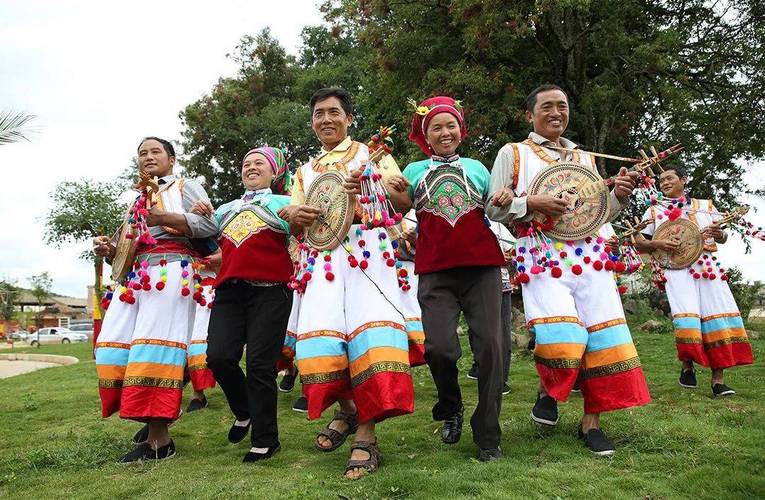
    Hani Manggu Drum Dance of in the forestHani Manggu Drum Dance of in the forest

    Forest, Water, Villages and Terraces

    Water begins above the villages, where mountain forests capture rain and mist and help release it through springs. Channels then distribute water between settlements and fields across steep terrain.

    This four-part relationship is physical and social. Channels need clearing, divisions need maintenance, and households depend on shared rules as well as individual work. Honghe authorities continue to document ditch keepers and traditional water-allocation practices alongside modern water infrastructure.

    The visible pattern also changes from valley to valley. Duoyishu, Bada and Laohuzui occupy different slopes and drainage areas, which helps explain their distinct shapes, light and farming conditions.

    Working Farmland, Not a Scenic Installation

    The water mirrors, green stairways and gold harvest slopes exist because people continue to cultivate them.

    Official reporting in April 2026 described spring irrigation across the Yuanyang heritage area before transplanting from late April through May, with timing varying by elevation. Winter and early spring emphasize water and reflection; planting introduces new green; summer brings dense growth; autumn reveals ripening and harvest. Individual plots never change in perfect unison.

    Visitors should remain on public roads, viewing platforms and confirmed paths. A narrow terrace wall may look like a convenient shortcut, but one damaged edge can affect water flow or farm access below it.

    ⚠️Terrace Walls Are Agricultural Infrastructure
    Do not step onto cultivated plots, balance on terrace walls, block irrigation channels or move farming tools for a photograph. Use designated paths and follow the farmer or guide immediately when a route boundary changes.

    Hani Homes and Contemporary Village Life

    Traditional mushroom-shaped houses, fire-centered household spaces, embroidery, food, music and farming knowledge remain meaningful, but village life is not frozen in a heritage era.

    Concrete, modern services, tourism businesses, schools, migration and changing household preferences coexist with protected houses and cultivated terraces. A good guide explains those changes without ranking one village as more “pure” than another.

    Home interiors are private unless a resident or host explicitly invites the group inside. Sacred woods, ritual spaces, household altars and fire-related objects can carry local restrictions that are not obvious to a visitor. Ask before entering, sitting, touching or photographing.

    Best Yuanyang Viewpoints, Villages and Cultural Experiences

    The strongest Yuanyang Rice Terraces Hani culture route combines two contrasting viewpoints with one village and one guided cultural-landscape experience.

    Duoyishu Rice Terraces morning fogDuoyishu Rice Terraces morning fog
    Magnificent Sunset of Bada Rice TerracesMagnificent Sunset of Bada Rice Terraces

    Duoyishu Rice Terraces at Sunrise

    Before sunrise, tripods line the platform while mist shifts across the eastern valley. The view can change from blank white to layered water, villages and cloud within minutes—or remain hidden all morning.

    Duoyishu Rice Terraces (多依树梯田) are Yuanyang's classic sunrise area. The landscape includes terraces and villages across a broad bowl, making the experience useful even when color is subtle. Stay nearby when dawn matters, but keep a village or walking alternative ready for dense fog.

    Fact Panel — Duoyishu Rice Terraces

    • Location: Eastern Yuanyang terrace area, reached from the Xinjie scenic-region base
    • Landscape / cultural focus: Sunrise, cloud, villages and cultivated terraces in one valley view
    • Best light or timing: Dawn, with arrival time adjusted to the current season and entry arrangement
    • Time needed: One early-morning session, plus optional village context afterward
    • Walking: Short platform access; nearby village walks require separate confirmation
    • Current access: Main visitor area generally operates, but hours, admission and parking need reconfirmation
    • Best for: First-time visitors, landscape photography and understanding the vertical settlement pattern
    • Main etiquette point: Keep noise low near homes and never leave public paths for a cleaner camera angle
    • Best route fit: Day 2 sunrise after an overnight near the eastern terrace area

    Bada Rice Terraces at Sunset

    Late light moves across long folds of cultivated hillside, revealing scale more gradually than a single dramatic sunrise. Cloud can soften the entire valley or erase the sun before it reaches the water.

    Bada Rice Terraces (坝达梯田) suit a broad sunset panorama and help travelers see how fields descend across several settlement areas. Arrive with enough buffer for mountain roads and crowds, then judge the evening by visibility rather than a fixed clock time.

    Fact Panel — Bada Rice Terraces

    • Location: Western side of the main Yuanyang scenic region
    • Landscape / cultural focus: Large-scale terrace panorama, villages, cloud and western light
    • Best light or timing: Late afternoon through sunset when the horizon remains open
    • Time needed: Two to three hours including arrival buffer
    • Walking: Mainly viewing-platform access; follow current barriers and paths
    • Current access: Reconfirm operating hours, entrance arrangements and road conditions
    • Best for: Broad landscape photography and travelers comparing valley forms
    • Main etiquette point: Share limited platform space and keep tripods clear of circulation routes
    • Best route fit: Day 1 or Day 2 sunset, chosen after checking cloud and road conditions
    Laohuzui Rice Terraces spring greenLaohuzui Rice Terraces spring green
    Qingkou Hani Rice Terraces cultural landscapeQingkou Hani Rice Terraces cultural landscape

    Laohuzui/Tiger Mouth and Current Access

    The steep Laohuzui valley once anchored many classic Yuanyang sunset images, but its history now includes landslide damage, field restoration and unresolved visitor information.

    Laohuzui Rice Terraces (老虎嘴梯田), also called Tiger Mouth, remain part of the World Heritage landscape and an important farming area. However, current 2026 public sources conflict: one destination source says the viewing platform remains closed, while other official material lists Laohuzui within the core visitor ticket and describes current viewing.

    Do not make it the only sunset plan. Ask the scenic-area operator whether the official platform, access road and safe public boundary are open for the exact date; use Bada or another confirmed viewpoint when the answer is unclear.

    Fact Panel — Laohuzui Rice Terraces

    • Location: Panzhihua area, southwest of the main Xinjie base
    • Landscape / cultural focus: Steep terraces, landslide history, restoration and working agricultural heritage
    • Best light or timing: Historically associated with sunset; current use depends on verified access
    • Time needed: Only schedule after direct confirmation and road-time review
    • Walking: Do not use unofficial slopes or resident-led shortcuts around a closure
    • Current access: Conflicting 2026 information; confirm directly before departure
    • Best for: Historical and landscape context when the official visitor area is confirmed safe and open
    • Main etiquette point: A cultivated lower area is not an alternative public viewing platform
    • Best route fit: Optional substitution, never the fixed anchor of the itinerary
    ⚠️Laohuzui Access Is Not Settled Online
    Current 2026 sources disagree about the official viewing platform. Do not bypass a barrier, follow an informal slope or accept a roadside claim as authorization. Use only the access confirmed by the scenic-area operator that day.

    Qingkou Village and the Cultural-Landscape Pattern

    Thatched roofs, stone lanes and terraces appear beneath the forest edge at Qingkou, making the four-part landscape easier to read at human scale. Daily household life continues around the visitor route.

    Qingkou Hani Village (箐口哈尼族民俗村) offers an accessible introduction to mushroom-shaped houses, village layout and the relationship between settlement and farmland. It is also a managed visitor setting, so distinguish public interpretation, scheduled demonstrations and commercial activity from private home life.

    Fact Panel — Qingkou Village

    • Location: Main Yuanyang scenic region near adjoining terrace areas
    • Landscape / cultural focus: Hani village form, houses, forest edge, channels and farmed terraces
    • Best light or timing: Daytime, after the dawn rush or before a sunset viewpoint
    • Time needed: One to two hours with interpretation
    • Walking: Uneven stone lanes and slopes; remain on public routes
    • Current access: Reconfirm entrance, program schedule and any interior areas open to visitors
    • Best for: First-time cultural-landscape orientation and travelers with limited time
    • Main etiquette point: Never treat a closed door, courtyard or resident as part of a public exhibit
    • Best route fit: Day 2 between Duoyishu sunrise and Bada sunset
    Longshuba Rice Terraces in Yuanyang County, HongheColorful Longshuba Rice Terraces
    Shengcun Market in YuanyangShengcun Market in Yuanyang

    Longshuba Rice Terraces and Walking

    Near Xinjie, the experience changes from a distant panorama to a slower walk beside fields and village slopes. Seasonal red duckweed may add color, but it should never be promised.

    Longshuba Rice Terraces (龙树坝梯田) work best as a walking-oriented alternative when the current path is safe and clearly public. The area can add sunset potential and close field detail without repeating a large formal platform.

    Fact Panel — Longshuba Rice Terraces

    • Location: Near Xinjie Old Town (新街镇)
    • Landscape / cultural focus: Close terrace detail, walking, village edge and seasonal field color
    • Best light or timing: Late afternoon when weather and the return route remain comfortable
    • Time needed: Two to three hours with an unhurried return
    • Walking: Sloped and potentially muddy; use the confirmed public path only
    • Current access: Verify the trail, surface, turnaround and any field restrictions locally
    • Best for: Walkers, repeat visitors and photographers seeking close landscape detail
    • Main etiquette point: Red plants, water surfaces and terrace walls remain part of cultivated fields
    • Best route fit: Day 3 before onward travel or as a fog-day walking option

    Shengcun Market and Everyday Trade

    Baskets, vegetables, meat, clothing, household goods and conversation fill Shengcun when the working market is active. The value lies in ordinary exchange, not a staged ethnic display.

    Shengcun Market (胜村集市) can add contemporary context to a viewpoint-heavy route, but its actual market day must be confirmed locally. Arrive early, keep circulation clear and ask before photographing sellers or customers at close range.

    Do not identify someone's ethnicity from dress or use people as foreground decoration. Buy only what you genuinely want, handle goods after permission and avoid bargaining aggressively over small amounts.

    Azheke Village and Community-Led Tourism

    Azheke Hani cultivated terracesAzheke Hani cultivated terraces
    Azheke Hani Village mushroom housesAzheke Hani Village mushroom houses

    Stone lanes curve between mushroom houses while terraces descend below the village and forest rises above it. Azheke makes the landscape system visible without separating architecture from farming and residence.

    Azheke Village (阿者科村) uses a village-collective tourism model linked to heritage conservation and resident benefit. UN Tourism selected Azheke as a Best Tourism Village in 2024, citing its community-driven approach, living culture and protection of the forest–water–village–terrace relationship.

    That recognition does not make every activity continuously available. Confirm the village guide, visitor route, farm experience, cultural program, photography rules and any home entry before travel. A resident-led explanation is more valuable than searching lanes independently for an unplanned interior visit.

    Fact Panel — Azheke Village

    • Location: World Heritage core landscape in the Yuanyang scenic region
    • Landscape / cultural focus: Community-led tourism, mushroom houses, working terraces and village protection
    • Best light or timing: Daytime, with enough time for a local explanation rather than a rushed photo stop
    • Time needed: Half a day when a guided village or farming experience is confirmed
    • Walking: Stone lanes, slopes and field-edge paths; mobility needs should be discussed in advance
    • Current access: Confirm entry, guide arrangements, activities and permitted visitor areas
    • Best for: Cultural-landscape learning, village architecture and community-tourism context
    • Main etiquette point: Tourism income does not turn homes, residents or rituals into open-access attractions
    • Best route fit: Day 2 or Day 3, replacing rather than stacking another viewpoint
    3 Days Yuanyang Rice Terrace Photography Tour from Kunming

    3 Days Yuanyang Rice Terrace Photography Tour from Kunming

    Tour Route:Kunming-Yuanyang County-Kunming
    Tour Type:Photography Tours
  • Yuanyang Rice Terraces & Hani Culture Travel Guide 3 Days
  • Yuanyang Rice Terraces & Hani Culture Travel Guide 2 Places
  • View Detail

    Yuanyang Viewpoints and Hani Experiences Compared

    Yuanyang experiences differ in light, walking effort and cultural depth, so the strongest route uses contrast instead of collecting every viewpoint.

    Yuanyang Viewpoints and Hani Cultural Experiences at a Glance

    Place or ExperienceMain FocusBest TimingTime NeededWalkingCultural ContextMain Caution
    DuoyishuSunrise, cloud, villages and eastern-valley terracesDawnEarly-morning sessionLow at the platformShows the vertical landscape at broad scaleFog can hide the view completely
    BadaLarge western-valley panorama and sunsetLate afternoonTwo to three hoursLow at the platformReveals the scale of cultivated slopesCrowds and cloud can reduce the experience
    LaohuzuiSteep terraces, restoration and legacy imageryOnly after access confirmationVariableUnknown until confirmedImportant World Heritage farming areaCurrent sources conflict on visitor access
    QingkouVillage form, houses and adjoining terracesDaytimeOne to two hoursModerate village slopesAccessible cultural-landscape interpretationPublic displays and private homes need clear separation
    LongshubaWalking and close field detailLate afternoonTwo to three hoursModerateBrings visitors closer to cultivated landscapesUse only confirmed public paths
    Shengcun MarketContemporary trade and local food contextConfirmed market morningOne to two hoursLowWorking market rather than performanceSchedule and portrait permission require confirmation
    AzhekeCommunity-led tourism and protected village landscapeDaytimeHalf dayModerateLinks residence, terraces and benefit sharingActivities and access are never automatic

    A two-viewpoint day should pair Duoyishu with Bada, not add every famous platform. A culture-first day should replace one panorama with Azheke or Qingkou and allow time for interpretation.

    5 Days South Yunnan Ethnic Minority Discovery and Tropical Forest Photograph Tour

    5 Days South Yunnan Ethnic Minority Discovery and Tropical Forest Photograph Tour

    Tour Route:Kunming-Shilin County-Jianshui County-Yuanyang County-Yuanyang Rice Terraces-Yuanjiang County-Puer-Menglun Town-Jinghong
    Tour Type:Photography Tours
  • Yuanyang Rice Terraces & Hani Culture Travel Guide 5 Days
  • Yuanyang Rice Terraces & Hani Culture Travel Guide 11 Places
  • View Detail

    How Many Days Do You Need in Yuanyang?

    Two days cover the essential sunrise, sunset and village context, while three days create the flexibility that Yuanyang's fog and winding roads demand.

    • One day: Choose one viewpoint and one village. A same-day dash cannot reliably cover both sunrise and sunset.
    • Two days: Add Duoyishu at dawn, Bada in late light and either Qingkou or Azheke between them.
    • Three days: Add a confirmed market, Longshuba walk, farming explanation or fog backup without compressing the main valley circuit.
    • Four days or more: Explore quieter villages, spend more time with agricultural interpretation or continue through southern Yunnan.

    Travelers comparing Yuanyang with another rice-terrace region need a longer journey rather than a rushed detour.

    Sample 3-Day Yuanyang Rice Terraces Itinerary

    This three-day Yuanyang Rice Terraces Hani culture itinerary protects one sunrise and two flexible afternoon options while leaving room for village life.

    3-Day Yuanyang Rice Terraces and Hani Culture Itinerary

    🌄
    Day 1
    Arrive and Read the Landscape
    Transfer from Kunming or Jianshui, stop for a cultural-landscape introduction, then use Bada or another confirmed western viewpoint for late light.
    🏘️
    Day 2
    Sunrise and Village Context
    Visit Duoyishu at dawn, rest after breakfast, then choose Qingkou or a confirmed Azheke visit before a weather-dependent sunset plan.
    🌾
    Day 3
    Market or Terrace Walk
    Visit Shengcun only when its market schedule aligns; otherwise use a confirmed Longshuba walk or farming-context stop before the onward transfer.

    Do not add Laohuzui unless the official visitor route is directly confirmed. Fog may also reverse the order: a hidden sunrise is a reason to slow down in a village, not to race between several equally cloudy platforms.

    8 Days South Yunnan Ethnic Culture Tour with Yuanyang Rice Terraces and Puerh Tea

    8 Days South Yunnan Ethnic Culture Tour with Yuanyang Rice Terraces and Puerh Tea

    Tour Route:Kunming-Shilin County-Jianshui County-Yuanyang County-Puer-Jinghong-Nannuo Tea Mountain in Menghai County, Xishuangbanna-Jinghong
    Tour Type:Hiking Tours
  • Yuanyang Rice Terraces & Hani Culture Travel Guide 8 Days
  • Yuanyang Rice Terraces & Hani Culture Travel Guide 9 Places
  • View Detail

    Best Time, Getting There and Practical Planning

    Yuanyang planning works best when agricultural stages guide expectations and the route keeps enough time for fog, road curves and changing field conditions.

    Best Time for Yuanyang Rice Terraces

    This table shows the broad agricultural choices; local conditions and farming schedules vary from year to year.

    Best Time for Yuanyang Rice Terraces

    Landscape StageTypical PeriodWhat the Terraces ShowBest ForMain Caution
    Flooded and reflective fieldsBroadly November–AprilWater, sky reflections, fog and field geometryClassic landscape photography and water-system interpretationIndividual plots flood at different times; clear light is never guaranteed
    Spring preparation and transplantingBroadly April–MayPlowing, repaired walls, seedbeds and new rice plantsLearning about active farming and irrigationDo not interrupt work or enter fields for photographs
    Green growing seasonBroadly June–SeptemberDense green terraces, cloud and frequent rainVillage walks and agricultural landscapeRain, mud and low visibility can disrupt roads and views
    Harvest transitionBroadly September–OctoberYellow-green fields, cutting and household farm workHarvest context and warmer colorTiming varies by elevation and plot; some fields may already be bare
    Major holiday periodsEspecially national public holidaysThe same seasonal landscape with higher demandTravelers tied to fixed datesRoads, platforms and accommodation can become crowded

    Getting to and Around Yuanyang

    Yuanyang has no rail station beside the terraces, and the final approach involves winding mountain roads.

    Getting to and Around Yuanyang Rice Terraces

    Journey StageBest ApproachTypical Planning TimeMain Note
    Kunming to YuanyangPre-arranged road transfer or current long-distance bus connectionMost of a day; direct buses are commonly listed around five to six hoursConfirm the current station, schedule, stops and final arrival point
    Jianshui to YuanyangPre-arranged road transferAllow a generous half dayA practical heritage-town pairing, but mountain traffic changes timing
    Nansha or Xinjie approachLocal road transferSchedule-dependentYuanyang's new county town and the terrace-region base are not the same place
    Xinjie to viewpoints and villagesArranged driver or confirmed local vehicleSeparate morning and afternoon road blocksKeep the same pickup plan when fog or crowds change the stop
    Village and terrace walkingLocal guide plus designated public pathsOne to three hours depending on routeConfirm surface, field boundaries, mobility needs and return point

    Plan Sunrise, Sunset and Fog Backups

    Sunrise and sunset direction matters, but visibility matters more. Check the forecast and local cloud conditions, then protect a village, market or walking alternative rather than waiting in a vehicle all day.

    Stay near the chosen dawn area when early photography is important. Prepare clothes, batteries and breakfast the previous evening, but never publish or rely on one fixed arrival time throughout the year.

    A flexible guided sequence can switch between a viewpoint, village or confirmed walk when fog closes the valley. No guide can guarantee cloud, reflection or dramatic color.

    Photography, Drones and Consent

    Ask before making an identifiable portrait, especially of children, older residents, workers or people in ethnic clothing. A market purchase, entry ticket or village fee does not include personal image rights.

    Do not hand children money or sweets for photographs. Support the community through legitimate local products, guide services or village-managed activities instead of creating a reward for posing.

    Drone use requires current civil-aviation, heritage-area, scenic-area and local permission checks. Never fly low over homes, people, animals, rituals or working fields, and treat a verbal “probably allowed” as insufficient.

    What to Pack

    • Warm dawn layer: mountain mornings can feel cold even when the valley becomes warm later.
    • Rain protection: compact shell and bag cover for fog, rain and changing mountain weather.
    • Grippy walking shoes: stone lanes, steps and field-edge paths can become muddy or slick.
    • Sun protection: hat, sunscreen and water for exposed platforms and village walks.
    • Camera protection: lens cloth, rain cover, spare batteries and a stable bag rather than excessive equipment.
    • Offline Chinese names: save the hotel, Xinjie, each viewpoint and the driver's meeting point.
    • Small respectful purchases: carry a practical payment option, but never use money to arrange an unplanned portrait.

    For an accurate cost breakdown tailored to your group size, dates, and preferences, contact the Yaso Trip team for a custom quote.

    Tips and Cautions for Respectful Yuanyang Travel

    Respectful Yuanyang Rice Terraces Hani culture travel protects farming, privacy and community life while keeping the route realistic.

    • Confirm Laohuzui directly: do not rely on a ticket listing, old photograph or driver assumption when current sources conflict.
    • Build around weather: keep one village, market or walking backup for fog and heavy cloud.
    • Stay off terrace walls: use public roads, platforms and confirmed paths even when another photographer crosses a field.
    • Ask before portraits: permission applies separately to residents, vendors, workers, performers and children.
    • Keep homes private: enter only after a clear invitation and remain in the area your host opens.
    • Verify market days: Shengcun and other rotating markets can change; never promise a market without a current local check.
    • Label performances honestly: arranged dress, dance or farming demonstrations can be valuable when presented as organized activities.
    • Respect working time: planting, repair, harvest and water management take priority over visitor questions or camera positions.
    ⚠️Avoid the Tourist Trap: A Viewpoint Circuit Is Not Cultural Immersion
    A rushed sequence of platforms and paid costume portraits may produce photographs without explaining the living landscape. Replace one repetitive viewpoint with a guided village, market or farming-context visit, and label every staged activity accurately.

    Why Travel With Yaso Trip in Yuanyang?

    Yuanyang benefits from flexible local planning because fog, road conditions, farm work and village arrangements can change a seemingly simple viewpoint circuit.

    A guide can explain how water moves from forest to village and field, identify which paths are public, and help request portrait or home-entry permission. The route can also replace an obscured viewpoint with Azheke, Qingkou, a confirmed market or a safe terrace walk instead of chasing visibility across the mountains.

    Yaso Trip can connect Yuanyang with Jianshui or continue south toward the contrasting Dai cultural landscape in the planned Dai culture guide. Current access, village hosts, market timing and agricultural activities remain subject to confirmation.

    Plan Your Yuanyang Cultural-Landscape Journey

    The best Yuanyang route balances one sunrise, one broad sunset area, a village and enough uncommitted time for mountain weather.

    Tell Yaso Trip whether photography, farming knowledge, village architecture, markets, walking or a Jianshui connection matters most. The itinerary can then prioritize cultural depth and safe access instead of forcing every viewpoint into three crowded days.

    ENQUIRY

    Have a question before booking? Message us to learn more.
    Click to change
    Expand All
    1. Why are the Yuanyang Rice Terraces important to Hani culture?

    They express a living relationship among water-conserving forests, mountain villages, irrigation channels, cultivated terraces and community institutions. Families continue to farm and maintain the landscape, so its importance is agricultural, social and cultural as well as scenic.

    2. Which Yuanyang viewpoint is best for sunrise?

    Duoyishu is the classic sunrise choice because its eastern-valley view combines terraces, villages, cloud and reflective fields. Fog can hide the entire landscape, so stay nearby and prepare a village or walking backup.

    3. Which Yuanyang viewpoint is best for sunset?

    Bada is the most dependable mainstream sunset choice when the western horizon is visible. Its broad valley shows the scale of the terraces, but cloud and crowds can reduce the experience. Choose the final stop using current weather and road conditions.

    4. Is Laohuzui Rice Terrace currently open?

    Current 2026 public sources conflict about the official viewing platform. Some material lists Laohuzui within the visitor ticket, while another current destination source says it remains closed after geological damage. Confirm directly with the scenic-area operator and never bypass a barrier.

    5. How many days do you need in Yuanyang?

    Two days cover Duoyishu, Bada and one village when weather cooperates. Three days are better because they allow a market, walk or Azheke visit and provide a backup when fog hides a sunrise or sunset.

    6. What is the best time to visit the Yuanyang Rice Terraces?

    Winter and early spring offer the broadest chance of flooded reflections, spring brings field preparation and transplanting, summer is green and rainy, and autumn shows harvest colors. Exact appearance varies by elevation, rainfall and individual farming decisions.

  • Tours
  • Related Posts
  • Attractions
  • ★★★★
    3 Days Yuanyang Hani Rice Terraces Tour (City Tour)

    3 Days Yuanyang Hani Rice Terraces Tour (City Tour)

    Yuanyang-Xinjie Town-Bada-Duoyishu-Laohuzui-Yuanyang
    Yuanyang Rice Terraces & Hani Culture Travel Guide3 Days Yuanyang Rice Terraces & Hani Culture Travel Guide2 Places
    This tour is designed for photographers who like to shoot at Yuanyang Rice Terraces (human's great masterpiece and was designated as one of the world heritage sites). It provides e...

    Related Categories