Yiliang County (彝良县) in northeastern Yunnan, Zhaotong City, is a mountainous destination known for its Wumeng Mountain landscapes, Xiaocaoba forests and waterfalls, Gastrodia elata culture, red tourism, ethnic traditions, historic towns, and cool-climate wellness travel. The county is developing the tourism identity of “Hometown of the General and Home of Gastrodia”, combining ecological tourism with red culture, health and wellness, rural tourism, and local agricultural products. In recent years, Xiaocaoba Ecological Tourist Area has been upgraded to a national 4A tourist attraction, while the Luo Binghui Memorial Museum is a national 3A attraction and Niujie Ancient Town has been recognized as a provincial-level historical and cultural town.
Xiaocaoba Ecological Tourist Area
Xiaocaoba Ecological Tourist Area (小草坝生态旅游区) is the signature natural attraction of Yiliang and one of the most important destinations for exploring the county's forests, waterfalls, mountains, streams, and ethnic culture. Located in the Wumeng Mountain area, the attraction covers a large mountainous landscape with extensive forest vegetation and numerous streams, peaks, waterfalls, and rock formations. It is now a national 4A tourist attraction.
The landscape changes throughout the year: spring brings flowers and fresh green forests, summer is ideal for waterfalls and cool mountain air, autumn brings colorful foliage, and winter can create a quiet, misty or snowy mountain atmosphere. This makes Xiaocaoba particularly attractive for hiking, forest photography, waterfall sightseeing, ecological exploration, and summer retreats.
Xiaocaoba Waterfalls and Mountain Streams
Water is one of the defining elements of Xiaocaoba. Numerous streams pass through the forest landscape, creating waterfalls, pools, cascades, and river-carved rocks. Among the well-known scenic features are Wangfu Waterfall (望夫瀑), Yingke Waterfall (迎客瀑), Yuzhu Waterfall (玉柱瀑), Foguangpu Waterfall (佛光瀑), and Tianhe Dieshui (天河叠水). Wangfu Waterfall Yingke Waterfall Yuzhu Waterfall
Walking along the forest paths allows visitors to experience the sound of flowing water, moss-covered rocks, ancient trees, cliffs, and waterfalls within a relatively compact natural environment. The combination of forest trails and waterfall scenery makes Xiaocaoba particularly suitable for nature photography and moderate outdoor exploration.
Ancient Forests and Biodiversity
The ecological value of Xiaocaoba extends far beyond its waterfalls. The area contains extensive natural forests and a rich variety of plant and animal species, creating an important ecological landscape within the Wumeng Mountains. The forest environment includes rare and protected plant species as well as diverse wildlife.
For visitors, this biodiversity creates opportunities for forest walks, botanical observation, birdwatching, ecological photography, and nature education. The atmosphere is especially different from the warmer landscapes of southern Yunnan, with dense vegetation, mountain streams, mist, and cool air creating a distinctive highland forest experience.
Gastrodia Elata and the “Home of Gastrodia”
Yiliang is closely associated with Gastrodia elata, locally known as Tianma (天麻), and Xiaocaoba is recognized as one of the important origin areas of this medicinal plant. The special combination of elevation, moisture, temperature, forest environment, and local cultivation traditions has helped establish Yiliang's reputation as the “Home of Gastrodia.”
Gastrodia elata is more than an agricultural product in Yiliang; it has become part of the county's tourism identity. Visitors can explore Tianma cultivation, agricultural landscapes, local products, food culture, and traditional knowledge while traveling through Xiaocaoba and surrounding villages. The county is also developing tourism products that connect Gastrodia with ecological wellness and rural tourism.
Tianma Food and Agricultural Experiences
The connection between tourism and Gastrodia elata provides an opportunity to explore Yiliang through food. Local cuisine uses Tianma and other mountain ingredients in dishes associated with wellness, traditional cooking, and rural food culture.
The county's recent tourism development has emphasized agricultural tourism and seasonal experiences around Gastrodia harvesting. The “Gastrodia Harvest · Sharing the Taste of Autumn” route has been included among national-level rural tourism精品线路, showing how agricultural production is being incorporated into visitor experiences.
Luo Binghui and Red Tourism
Yiliang is the hometown of General Luo Binghui (罗炳辉), an important figure in China's revolutionary history. The Luo Binghui Memorial Museum (罗炳辉纪念馆) presents his life and historical role and has been recognized as a national 3A tourist attraction. Luo Binghui Memorial Museum
The memorial site forms an important part of Yiliang's red tourism resources. Visitors interested in modern Chinese history can combine the museum with related revolutionary heritage sites and then continue into the surrounding Wumeng mountain landscapes, creating a travel experience that connects historical memory with the geography of the region.
Wumeng Turning Movement Heritage
Another important historical theme in Yiliang is the Wumeng Turning Movement during the Long March period. Sites associated with the Red Army's activities in the county provide opportunities to understand the strategic importance of the Wumeng Mountains and the difficult terrain through which revolutionary forces traveled.
The county is developing a themed route linking the Luo Binghui Memorial Museum, Wumeng Turning Movement historical sites, China Gastrodia Museum, Xiaocaoba technology demonstration area, and Xiaocaoba Scenic Area. This creates a distinctive combination of red culture, ecological landscapes, agricultural culture, and wellness tourism.
Niujie Ancient Town
Niujie Ancient Town (牛街古镇) represents Yiliang's historical and cultural side. The town preserves the atmosphere of an old mountain settlement and reflects the historical connections among trade, transportation, agriculture, and local communities in northeastern Yunnan.
Niujie is now recognized as a provincial-level historical and cultural town, making it an important complement to Xiaocaoba's natural scenery. Visitors can explore traditional streets, local architecture, everyday markets, food, and the slower pace of a historic mountain town.
Miao and Yi Ethnic Culture
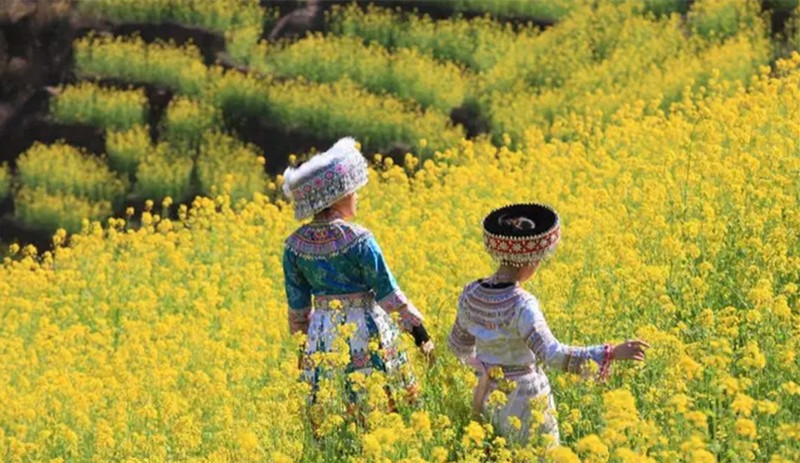
Yiliang has a diverse ethnic cultural landscape, particularly associated with Miao and Yi communities. Traditional festivals, music, dance, clothing, food, handicrafts, and village customs form an important part of the county's cultural tourism resources.
Xiaocaoba itself combines natural scenery with Miao and Yi cultural traditions, allowing visitors to experience ethnic culture within a forest and mountain setting. Seasonal celebrations and traditional sports also contribute to Yiliang's growing ethnic cultural tourism program.
Traditional Villages and Rural Landscapes
Outside the major scenic attractions, Yiliang's mountain villages provide a quieter way to experience local life. Farmland, forests, traditional houses, mountain roads, streams, and agricultural activities create landscapes suitable for rural photography, village walks, food experiences, and cultural encounters.
The county is increasingly integrating villages into its tourism system, particularly through combinations of ecology, agriculture, ethnic culture, local products, and leisure travel. For international visitors, these rural areas can provide a more intimate perspective on everyday life in northeastern Yunnan.
Mountain Climate and Summer Retreats
Yiliang's highland and mountainous terrain creates a cooler environment than many low-altitude destinations in Yunnan. Xiaocaoba's forests, streams, waterfalls, and relatively cool climate make it especially attractive during the summer months.
The county is developing ecological wellness and summer tourism around Xiaocaoba, with forest recreation, mountain landscapes, agricultural experiences, and cultural tourism forming a broader vacation experience. This makes Yiliang suitable not only for day trips but also for slower multi-day stays.
Four-Season Forest Scenery
Yiliang offers different visual experiences throughout the year. Spring brings flowers and fresh vegetation, while summer is the season for waterfalls, forest walks, and cool-climate travel. Autumn is particularly attractive for colorful forests and agricultural harvest experiences, while winter provides a quieter mountain atmosphere and opportunities to experience the seasonal character of the Wumeng landscape.
The seasonal changes are one reason Xiaocaoba has become a strong destination for nature photography. Visitors can return at different times of the year and experience significantly different colors, weather, vegetation, and river conditions.
Forest Photography and Outdoor Exploration
The combination of ancient trees, waterfalls, mountain streams, cliffs, moss, mist, and changing seasonal colors gives Yiliang strong potential for landscape photography and outdoor travel. Xiaocaoba contains numerous individual natural viewpoints and geological formations distributed along its streams and forest paths.
For active travelers, the destination can be experienced through hiking and forest exploration rather than simply sightseeing from vehicles. The terrain also creates opportunities for photographers to capture changing weather, waterfall movement, forest textures, and mountain landscapes.
Red Culture, Green Ecology and Local Products
A distinctive feature of Yiliang's current tourism development is the combination of red culture, green ecology, and local agricultural products. The county's tourism planning specifically connects Luo Binghui's historical heritage with Xiaocaoba's forests and waterfalls and with the cultural and economic value of Gastrodia elata.
This combination creates a diversified travel experience: visitors can explore revolutionary history in the county center, travel into the Wumeng Mountains, hike through forests and waterfalls, learn about Tianma cultivation, visit historic towns, and experience Miao and Yi cultural traditions within one destination.
Yiliang Food and Mountain Cuisine
Yiliang's food culture reflects the agricultural environment of northeastern Yunnan and the influence of neighboring Sichuan and Guizhou. Tianma-based dishes, mountain vegetables, mushrooms, local meats, traditional village foods, and seasonal agricultural products are important elements of the local culinary experience.
Food is particularly valuable when combined with rural tourism because visitors can connect local dishes with the farms, forests, and communities that produce their ingredients. This makes food culture, agricultural tourism, and ethnic village experiences natural complements to sightseeing in Yiliang.
Yiliang as a Northeast Yunnan Travel Destination
Yiliang is also strategically positioned within broader northeastern Yunnan tourism routes. In 2026, an officially promoted Yunnan–Sichuan–Guizhou Red Culture Journey included the route from Zhaotong through Yiliang and Xiaocaoba toward Weixin and Zhenxiong, demonstrating how Yiliang can function as a connecting destination between ecological and historical attractions in the region.
For travelers exploring Zhaotong, Yiliang can therefore be combined with other destinations around the Wumeng Mountains, creating longer journeys focused on mountains, forests, red heritage, ethnic culture, local food, and cool-climate tourism.
Nature, History and the Home of Gastrodia
The overall character of Yiliang County Travel Highlights comes from the combination of Xiaocaoba's forests and waterfalls, Wumeng Mountain ecology, Gastrodia elata culture, Luo Binghui's revolutionary heritage, Niujie Ancient Town, Miao and Yi traditions, rural landscapes, and summer wellness tourism.
For international visitors, Yiliang can be explored through several themes: forest hiking, waterfall photography, ecological tourism, Gastrodia agricultural culture, red tourism, ethnic village experiences, historic-town exploration, rural food, and cool-climate vacations. Its distinctive appeal lies in the way green ecology, red history, ethnic culture, and local agricultural traditions are brought together within the mountainous landscape of northeastern Yunnan.
Overview
Yiliang County (彝良县) is a county under the administration of Zhaotong in northeastern Yunnan Province. It is located in the Wumeng Mountain region and forms part of the mountainous junction area of Yunnan Province (云南省), Guizhou Province (贵州省) and Sichuan Province (四川省). The county government is located in Jiaokui Subdistrict. Yiliang covers approximately 2,795.76 square kilometers and has a permanent resident population of around 472,000, while the registered population is considerably larger. Southwestern Mandarin, particularly the local Yunnan variety, is widely used in everyday communication.
Read More
Attractions
Yiliang County (彝良县), administered by Zhaotong City in northeastern Yunnan, is a mountainous destination in the Wumeng Mountains near the borders of Yunnan, Guizhou, and Sichuan. Its tourism resources can be broadly understood through four major themes: mountain ecology and forests, red historical culture, ethnic minority villages, and historic towns.
Read More
Tours
Yiliang County (彝良县) travel packages can begin with a Xiaocaoba Ecological Tourism Area (小草坝生态旅游区) forest and alpine landscape tour, connecting Yiliang County Town, Xiaocaoba Town (小草坝镇), Baocang Village (宝藏村) and the surrounding mountain communities. The core of the route is Xiaocaoba, located northeast of the county seat, where the landscape combines old-growth forest, streams, peaks, waterfalls, mist and seasonal color. The tourism area covers about 163 square kilometers and contains numerous natural viewpoints distributed along 13 rivers and streams. A longer itinerary can combine forest walking, waterfall viewing, autumn foliage photography and a visit to the China Gastrodia Elata Museum (中国天麻博物馆), making this route particularly suitable for nature photography, summer retreats, forest recreation and travelers interested in Yunnan's mountain ecology.
Read More
Climate
Yiliang County (彝良县) is located in the Wumeng Mountain region of northeastern Yunnan, where deep river valleys, mid-mountain settlements, highland forests and alpine grasslands create a strongly varied mountain climate. The county stretches from low elevations of around 520 meters in the Baishui River valley to approximately 2,780 meters at Shirenpingzi in the Luoze River area, creating a vertical difference of more than 2,200 meters.
Read More
Transportation
Yiliang County (彝良县) is a mountainous county in northeastern Yunnan and part of Zhaotong City. Located in the Wumeng Mountains near the borders of Yunnan, Guizhou, and Sichuan, the county has a transportation network strongly influenced by its steep terrain, deep valleys, and dispersed mountain settlements.
Read More
Festivals and Activities
Yiliang County festivals offer a distinctive way to experience the ethnic cultures, traditional customs, intangible cultural heritage and rural life of northeastern Yunnan. Located in the Wumeng Mountains, Yiliang County (彝良县) is a multi-ethnic area where the Miao and Yi peoples are the principal indigenous ethnic communities. Important ethnic communities and villages are found around Luowang Miao Ethnic Township (洛旺苗族乡), Liuxi Miao Ethnic Township (柳溪苗族乡), Kuixiang Miao and Yi Ethnic Township (奎香苗族彝族乡), Shulin Yi and Miao Ethnic Township (树林彝族苗族乡), Muchungou Miao Village in Long'an Town, and Yunzhong Miao Village (云中苗寨) in Luozehe Town.
Read More
Travel Tips
Yiliang County (彝良县) is located in the Wumeng Mountains of northeastern Yunnan, where high mountains, river valleys, forests and rural communities create a distinctive mountain travel environment. The county's travel areas can generally be planned around five zones: Jiaokui–Fajie Urban Area (角奎—发界县城片区), Xiaocaoba Forest Wellness Area (小草坝森林康养片区), Luozhe River–Yunzhong Miao Village Area (洛泽河—云中苗寨民族乡村片区), Niujie Ancient Town–Luowang River Valley (牛街古镇—洛旺河谷片区) and the Kuixiang–Longjie Southern Mountain Area (奎香—龙街南部山地片区).
Read More
Maps
A Yiliang County travel map should first show the county's administrative structure, major townships and the relationship between the county seat and its principal tourism areas. A useful visitor map can place Yiliang County Town, Xiaocaoba Town, Long'an Town (龙安镇), Luozewang Town (洛泽河镇), Niujie Town (牛街镇) and other major settlements alongside the principal road network. For international visitors, the map should also emphasize the approach from the major highways toward Yiliang and then show the road connection from the county seat toward Xiaocaoba. Xiaocaoba is about 32 kilometers from the county seat, with the route passing through the mountainous interior rather than functioning as a compact urban attraction cluster.
Read More
Accommodation
Yiliang County (彝良县) is located in the Wumeng Mountain region of northeastern Yunnan and is characterized by high mountains, deep valleys, forests, rivers and ethnic villages. The county's accommodation resources are concentrated in several different tourism and service zones, reflecting the mountainous geography and the distribution of major towns and tourism destinations.
Read More
Dining
Yiliang County (彝良县) is located in the Wumeng Mountain region of northeastern Yunnan, where high mountains, deep valleys, and pronounced vertical climate differences have created a distinctive mountain food culture. The county's traditional communities are mainly associated with the Miao and Yi ethnic groups, while the Hui population is relatively small and scattered, with no concentrated Hui townships or villages.
Read More
Ethnic Culture
Yiliang County (彝良县) is located in the Wumeng Mountain region of northeastern Yunnan, where the cultural traditions of Yunnan, Guizhou and Sichuan meet. The county is home to Han, Miao, Yi, Hui and other ethnic groups, with the Miao and Yi forming the principal indigenous ethnic minority communities. The overall distribution pattern is characterized by large mixed settlements together with smaller concentrated ethnic communities.
Read More
Photos
The first Yiliang County travel photo gallery should concentrate on the mountains and forests of Xiaocaoba Ecological Tourism Area. The album can include wide panoramic photographs of the forest landscape, close-up views of streams and waterfalls, mist-covered mountain ridges, deep valleys, unusual rocks, forest trails and seasonal vegetation. A dedicated autumn album is especially valuable because Xiaocaoba develops strong red, yellow and green layers across the mountain forests, while cloud and mist can create changing backgrounds around the peaks and valleys. Spring flower landscapes, summer waterfalls and streams, autumn foliage, and winter frost or snow can therefore be organized into separate seasonal albums.
Read More
Shopping
Yiliang County (彝良县) is a mountain county in northeastern Yunnan where the Wumeng Mountains, river valleys and highland agricultural areas create a diverse range of local products. Jiaokui Subdistrict (角奎街道), the county seat, is the main commercial and distribution center, while the surrounding townships retain traditional market days where agricultural products, mountain foods and handmade goods are traded.
Read More
Education
Yiliang County (彝良县) belongs to Zhaotong City and is located in the northeastern section of the Wumeng Mountains near the Yunnan-Sichuan border. The county is characterized by high mountains, deep valleys, diverse ethnic communities, and significant differences in climate and agricultural production between elevations. Han, Miao, Yi, and other ethnic groups live across the county, providing a diverse social and cultural environment for educational and cultural study programs.
Read More
Administrative Divisions
Yiliang County(彝良县) is located in the northeastern part of Yunnan Province(云南省) and belongs to Zhaotong City(昭通市). Situated in the hinterland of the Wumeng Mountains(乌蒙山), the county features a mountainous landscape dominated by deep valleys, alpine areas, and river valleys. The county covers a large mountainous area, creating diverse tourism resources distributed among forests, ancient towns, ethnic villages, and revolutionary heritage sites.
Read More