
 7 Days GolfingTour
 8 Days Group Tour
 8 Days Yunnan Tour
 7 Days Shangri La Hiking
 11 Days Yunnan Tour
 6 Days Yuanyang Terraces
 11 Days Yunnan Tour
 8 Days South Yunnan
 7 Days Tea Tour
 8 Days Muslim Tour
 12 Days Self-Driving
 4 Days Haba Climbing
 Tiger Leaping Gorge
 Stone Forest
 Yunnan-Tibet
 Hani Rice Terraces
 Kunming
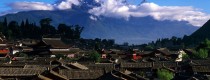 Lijiang
 Shangri-la
 Dali
Dali
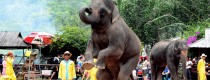 XishuangBanna
 Honghe
 Kunming
 Lijiang
 Shangri-la
 Yuanyang Rice Terraces
 Nujiang
 XishuangBanna
 Spring City Golf
 Snow Mountain Golf
 Stone Mountain Golf









 What Our Customers Say?
 alt="Puer Surrounding Counties and Towns: Weekly & Special Local Markets Travel Guide"
/>
alt="Puer Surrounding Counties and Towns: Weekly & Special Local Markets Travel Guide"
/>
Dongjing Daoist Music
Overview of Dongjing Daoist Music
Dongjing Daoist Music, an ancient traditional genre of Chinese ritual music, originated in the Song Dynasty in Sichuan Province. It is now popular in the Sichuan, Yunnan Han regions, and among the Naxi (纳西族) and Yi (彝族) peoples in places such as Lijiang and Chuxiong.
- Chinese Name: 洞经音乐
- Heritage Level: National Level
- Approval Date: November 11, 2014
- Declared Region: Xichang, Sichuan Province
- Heritage Category: Folk Music
- Heritage ID: II-128
Historical Origins
Dongjing Daoist Music, which has a long and rich history, involves a variety of musical instruments—both civil and martial—that produce elegant, simple, and classical music styles. The music is named after the Daoist scriptures “Wenchang Daodong Xianjing” (文昌大洞仙经), and it is associated with Daoist scriptures known as “Dongjing” (洞经), which are divided into three parts: Dongzhen, Dongxuan, and Dongshen. These scriptures are passed down by the Three Pure Ones, the central deities in Daoism.
The music originated in Pengxi County (蓬溪县), Sichuan Province, from the ancient Daoist silk and bamboo ensembles of the central plains. The founders of this music were Liu Ansheng and Wei Qi.
Key Figures in the Development of Dongjing Music:
- Liu Ansheng (刘安胜): A native of Pengxi County in Sichuan, Liu wrote the Wenchang Daodong Xianjing (文昌大洞仙经) in 1168, which became widely spread and became the foundation for Dongjing Daoist Music.
- Wei Qi (卫琪): A scholar from the Yuan Dynasty, Wei Qi was influential in interpreting Liu’s work and spreading Dongjing Music across regions. His Wenchang Daodong Xianjing Zhu (文昌大洞仙经注), presented to Emperor Wuzong of the Yuan dynasty in 1310, is considered a key text for the music’s development.
In 2014, Dongjing Daoist Music was included in the fourth batch of national intangible cultural heritage by the State Council of China.
Artistic Features
Dongjing Daoist Music has undergone over 830 years of development since its creation in 1168. It has gone through various stages, including initial transmission, growth, peak, decline, and revival, adapting to social, religious, and economic changes over time.
Key Characteristics of the Music:
- Musical Diversity: The number of pieces has significantly increased. At the beginning of the People’s Republic of China, there were over 2,000 pieces, and after thorough collection and sorting, there were over 1,500 works preserved.
- Instruments: The music features an array of instruments including the zheng, pipa, flute, bells, drums, cymbals, and gongs.
- Cultural and Spiritual Significance: The music is heavily influenced by Confucian and Daoist philosophies. Performers often come from scholarly backgrounds, and the music serves as a medium for spiritual pursuit, such as the quest for immortality and seeking blessings from the divine.
Types of Performances:
- Tanxiang (谈腔): This is a lyrical style performed with a band, typically focusing on singing Daoist hymns and praises.
- Songxiang (诵腔): A recitative style with simple, clear accompaniment, often using only a wooden fish or a bell.
- Duxiang (读腔): This style is more free-form and based on reciting texts, often with no musical accompaniment.
Representative Works
The music includes a vast array of pieces that have been passed down through generations. Some representative works include:
- Dali Dongjing Ancient Music (大理洞经古乐): A 1990 publication containing 270 pieces such as Nanqing Gong (南清宫), Bei Pingzhou (北评洲), and Yuhua Yin (玉华音).
- Kunming Dongjing Music (昆明洞经乐曲): Comprising over 130 pieces, including Xuan Yun Zhou (玄蕴咒), Dao Shi Ling (道师令), and Yi Jiang Feng (一江风).
- Weishan Dongjing Music (巍山洞经音乐): Contains more than 100 works such as Bu Chan Gong (步蟾宫), Xiao Zhe Gu (小鹧鸪), and Shui Long Yin (水龙呤).
Each region may have its own distinct set of songs, tailored to local customs and practices.
Cultural Significance
The performance of Dongjing Music is a key method of passing down Daoist culture. It not only preserves musical traditions but also embodies the spiritual essence of Daoism, integrating religious rituals with music and song.
In recent years, efforts have been made to revitalize Dongjing Daoist Music, taking it from traditional settings to modern stages. Today, it is performed in various cultural venues, helping bridge the gap between tradition and contemporary culture. This music has become a symbol of cultural heritage that continues to thrive across generations.
Conservation and Protection
Dongjing Daoist Music has been actively preserved and protected by local cultural institutions. In February 2022, both the Yishala Tan Jing (迤沙拉谈经古乐) and the Qiongdu Dongjing Music (邛都洞经古乐) in Sichuan were listed as provincial-level intangible cultural heritage projects.
To ensure the continuity of the tradition, music groups such as the Pengxi Dongjing Music Research Association have been formed, focusing on gathering and preserving musical scores, and training new generations of performers.
For more detailed information, you can visit the official website: Yunnan Intangible Cultural Heritage.

