Yunnan Guide
  • Yunnan Guide
  • Travel Tips
  • Tour Planing
  • Ethnic Culture
  • Yunnan Climate
  • Golf Courses
  • Travel Articles
  • Jinshuihe Border in Jingping County, Honghe

    01/06/2018Crazy Jone7877 wordsAbout 27 minutes

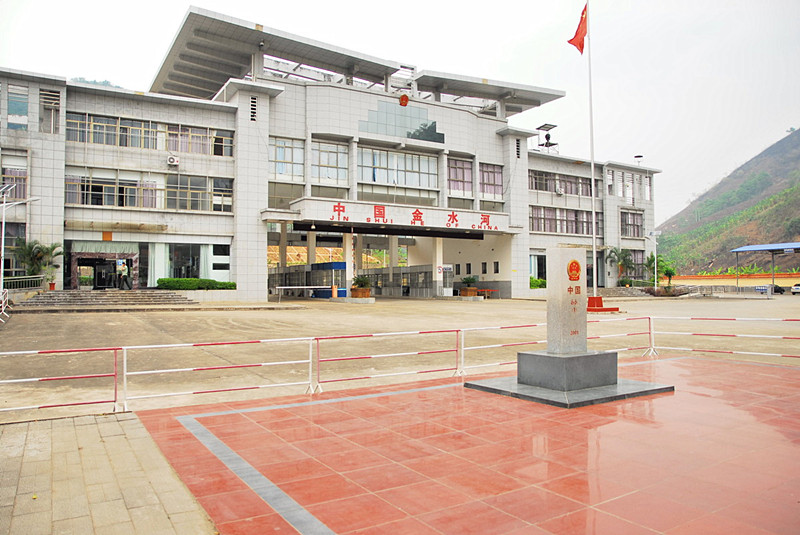
    The Jinshui Riverport (金水河口岸), formerly known as Nafa Port (那发口岸), is located at the southern end of Jingping County (金平县), Honghe Prefecture (红河州). This border point marks the intersection between China and Vietnam, with a border line stretching 502 kilometers.

    Location and Accessibility

    The Jinshui Riverport is situated just across the river from the Ma Lutang Port (马鹿塘口岸) in Vietnam, connected by the China-Vietnam Friendship Bridge (中越友谊桥). The port is approximately 95 kilometers from Laizhou City (莱州市) in Vietnam, 195 kilometers from Dien Bien Phu (奠边府), 580 kilometers from Hanoi (河内), and 54 kilometers from Santang Town (三塘镇) in Vietnam. Additionally, it is 147 kilometers from the capital of Lao Cai Province (老街省) and 231 kilometers from the Laotian border.

    Public transportation is readily available, with buses connecting to various cities: 159 kilometers to Gejiu (个旧), 210 kilometers to Kaiyuan (开远), 208 kilometers to Mengzi (蒙自), and 470 kilometers to Kunming (昆明). The port is located 35 kilometers from the county seat.

    Jinshuihe Border (金水河口岸) is situated at the southernmost point of Jingping County (金平县) in Honghe Prefecture (红河州), Yunnan Province, China. Originally named Nafa Port (那发口岸), this border crossing has been an essential international gateway for trade between China and neighboring Southeast Asian countries like Vietnam (越南), Laos (老挝), and Myanmar (缅甸).

    With its rich history dating back to the Qing Dynasty (清朝), Jinshuihe Border has evolved significantly over the years. It was first recognized as a national first-class port (国家一类口岸) in 1993 and was upgraded to an international multilateral port (国际多边口岸) in 2022, opening trade routes to countries like Laos and Myanmar. The port resumed passenger services in February 2023, following a break due to the COVID-19 pandemic.

    • Location: Southern end of Jingping County (金平县), Honghe Prefecture (红河州), Yunnan Province, China

    • Primary Border Connection: Vietnam's Maluodang Port (马鹿塘口岸), Lai Chau Province (莱州市), Vietnam

    • Established: February 1993 as a national first-class port

    • Resumed Passenger Services: February 20, 2023

    • Annual Trade Volume: 51,500 tons of goods in 2023

    • Total Trade Value in 2023: 371 million CNY

    Historical Development

    The history of Jinshuihe Border dates back to the 23rd year of the Guangxu Era (光绪二十三年) during the Qing Dynasty (清朝), when it was first established as Nafa Port (那发口岸). In 1954, the port opened as a border trade market (边民互市口岸), allowing local residents to exchange goods. However, it was closed in 1978 due to political and economic factors.

    In 1993, the port was reclassified as a first-class national port (国家一类口岸) and began operating for international trade. During the Vietnam War (越南战争) in the 1960s, the port was a crucial part of the Ho Chi Minh Trail (胡志明小道), handling transportation for supplies to Vietnam.

    The port’s significance continued to grow, and in 2022, it was upgraded to an international multilateral port (国际多边口岸), allowing for direct trade links with Vietnam, Laos, and Myanmar.

    Location and Facilities

    Geographical Position

    The Jinshuihe Border is located where the Teng Tiao River (藤条江) and Teng Tiao River (腾条河) meet, at an elevation of around 300 meters. The port is 38 kilometers from the Jingping County seat and 196 kilometers from Dien Bien Phu (奠边府), Vietnam.

    The port is connected to Vietnam's Maluodang Port (马鹿塘口岸) in Lai Chau Province (莱州市) by the China-Vietnam Friendship Bridge (中越友谊桥). After the reopening of passenger services in February 2023, the port has introduced several new facilities to streamline customs and logistics operations.

    Key Facilities:

    • International Logistics Center: Includes bonded storage and cold-chain logistics, facilitating the smooth passage of perishable goods.

    • Inspection and Customs Facilities: Equipped with state-of-the-art inspection technology to ensure efficient customs procedures.

    • Passenger Inspection Channels: 8 lanes for both customs and immigration checks to improve the flow of passengers.

    • Freight Handling: The port is capable of handling 51,500 tons of cargo annually, with a trade value of 371 million CNY in 2023.

    Port Functions and Strategic Importance

    Upgrades and Expansion

    In June 2022, Jinshuihe Border was upgraded to an international multilateral port, which opened new opportunities for trade with Laos (老挝), Myanmar (缅甸), and other Southeast Asian countries. The port now handles both cross-border e-commerce (跨境电商) and traditional freight shipments, significantly boosting the local economy.

    • 2023 Cargo Volume: 51,500 tons of goods

    • 2023 Passenger Traffic: Over 278,000 people crossed the border in 2023

    • One-stop Customs Process: The port operates under a “one-time declaration, one-time inspection, one-time release” system for faster customs clearance.

    Key Developments in 2023:

    • Trade Volume: The port processed 51,500 tons of imports and exports, reaching a trade value of 371 million CNY.

    • New Policies: The port implemented a “single-window” system, streamlining the customs procedures for both imports and exports.

    • Cross-border E-commerce Expansion: The port has also become a hub for cross-border e-commerce (跨境电商), facilitating online trade between China and Southeast Asian nations.

    Significant Events

    Resumption of Passenger Services:

    On February 20, 2023, the port reopened its passenger service after nearly three years of suspension due to the pandemic. The event was celebrated with a special ceremony where both Chinese and Vietnamese representatives exchanged flowers across the China-Vietnam Friendship Bridge (中越友谊桥). The day marked the return of cross-border passenger movement, with families and business people making their way across the border.

    Cross-border Cultural Exchange:

    In 2023, Jingping County (金平县) and Lai Chau Province (莱州市), Vietnam, held various cultural exchange programs, such as the Spring Festival celebrations and youth cultural exchanges between the two nations.

    Economic and Commercial Reforms:

    To enhance the economic performance of the port, local authorities are pushing for the development of a Border Trade Industrial Park (边贸产业园), which will focus on the import of agricultural products, including medicinal herbs, grains, and fruits. This will further strengthen the regional economy and promote trade integration between China (中国) and its Southeast Asian neighbors.

    Customs Procedures and Guidelines

    Passenger Services:

    • Route: Jingping North Bus Station (金平北部客运站) → Jinshuihe Border (金水河口岸) → Maluodang Port (马鹿塘口岸) → Lai Chau (莱州市), Vietnam

    • Operating Hours: Daily, with departures at 8:30 AM. Single-trip ticket price is 60 CNY.

    • Passenger Processing Time: Approximately 2 hours for clearance.

    • Customs Channels: The port uses Green Channels (绿色通道) for expedited processing.

    Freight Services:

    • Inspection Policy: “On-arrival inspection” (随到随检) for efficiency.

    • Daily Freight Handling Capacity: 2,000 people per day.

    • Cargo Registration: Businesses are required to complete cargo inspection and tax registration before shipment.

    Border Trade:

    • Trade Model: Utilizes an “Internet + Border Trade” (互联网+边民互市) model for tax-free transactions.

    • Transaction Volume: 3.6 billion CNY in the first half of 2025, reflecting strong border trade between the two countries.

    Surrounding Services

    Logistics:

    • International Logistics Center: Located near the port, this center offers bonded storage and cold-chain transportation services to ensure smooth cargo flow.

    Accommodation and Dining:

    • Nearby Accommodations: Simple guesthouses and Vietnamese-style eateries (越南特色小吃) are available for travelers and merchants alike.

    Cultural Experience:

    • Cultural Exchange Programs: Visitors can participate in the Miao Ethnic Flower Mountain Festival (苗族花山节) and other joint Chinese-Vietnamese border celebrations.

    Important Notes:

    Documentation:

    • Passenger Services: Travelers must carry both a passport and an ID card.

    • Freight Services: Enterprises must complete pre-registration for cargo inspection and customs clearance.

    Operating Hours:

    • Port Hours: Open from 09:00 to 12:00 and 13:30 to 17:30 daily.

    Weather:

    • Summer Heat: Be prepared for high temperatures, which can reach up to 57°C in the summer. Ensure you bring appropriate clothing to protect against the heat.

    For more information on border trade, travel routes, or other inquiries, please contact the Jingping County Transportation Bureau (金平县交通运输局) at 0873-3041177.

    How to Get There

    • From Kunming Changshui International Airport (昆明长水国际机场): Take a taxi or bus to Jingping County, which is approximately a 5-6 hour drive.
    • By Train: Travel by train to a nearby station and then use local transportation to reach the Jinshui Riverport.
    • By Car: Drive along the highways connecting Kunming to Jingping County, following signs to the Jinshui Riverport.

    Travel Tips

    1. Best Time to Visit: The ideal time to visit is during the spring and autumn months for mild weather.
    2. Border Crossing: Make sure to have all necessary documents for crossing the border if you plan to enter Vietnam.
    3. Local Cuisine: Don’t miss the chance to try local delicacies at nearby eateries.
    4. Shopping: The port area has various shops where you can purchase local handicrafts and products.
    5. Photography: Capture the beautiful scenery and the bustling activity at the port.
    More About

    ENQUIRY

    Have a question before booking? Message us to learn more.
    Click to change