7 Days GolfingTour
 8 Days Group Tour
 8 Days Yunnan Tour
 7 Days Shangri La Hiking
 11 Days Yunnan Tour
 6 Days Yuanyang Terraces
 11 Days Yunnan Tour
 8 Days South Yunnan
 7 Days Tea Tour
 8 Days Muslim Tour
 12 Days Self-Driving
 4 Days Haba Climbing
 Tiger Leaping Gorge
 Stone Forest
 Yunnan-Tibet
 Hani Rice Terraces
 Kunming
 Lijiang
 Shangri-la
 Dali
Dali
 XishuangBanna
 Honghe
 Kunming
 Lijiang
 Shangri-la
 Yuanyang Rice Terraces
 Nujiang
 XishuangBanna
 Spring City Golf
 Snow Mountain Golf
 Stone Mountain Golf




 What Our Customers Say?
 alt="Market Days in Menglian and Townships, Puer"
/>
alt="Market Days in Menglian and Townships, Puer"
/>
Jiuhe Bai Ethnic Town in Yulong County, Lijiang
Jiuhe Bai Autonomous Township (九河白族乡) is located in the southwestern part of Yulong Naxi Autonomous County (玉龙纳西族自治县), Yunnan Province. It is bordered by Tai’an Township (太安乡) to the east, connected to Jianyang Town (剑阳镇) of Jianchuan County in Dali Bai Autonomous Prefecture to the south, adjacent to Shitou Township (石头乡) to the west, and neighbors Shigu Town (石鼓镇) and Longpan Township (龙蟠乡) to the north. The total area of the township is 358.7 square kilometers. It administers 10 village committees, including Zhonggu (中古), Guanshang (关上), Diantou (甸头), Zhonghe (中和), Jinpu (金普), Beigao (北高), Nangao (南高), Longying (龙应), Jiuhe (九河), and Heyuan (河源), with 75 village groups. The township government is located in Baihan Market (白汉场), 50 kilometers away from the urban area, at an altitude of 2,400 meters.
Population and Ethnic Groups
As of the end of 2006, the township had a total of 7,007 households and a population of 25,517, including 12,793 males and 12,472 females. Six ethnic groups reside in the area: Bai, Naxi, Pumi, Lisu, Tibetan, and Han. The Bai ethnic group accounted for 12,803 people, the Naxi ethnic group for 9,962 people, and other ethnic groups for 2,752 people. The natural population growth rate was 0.09‰, with a population density of 64 people per square kilometer.
Climate and Topography
The topography of Jiuhe Bai Autonomous Township extends from north to south, with a narrow northern part and a wider southern part. The maximum east-west distance is 28 kilometers, and the maximum north-south distance is 32.25 kilometers. The highest elevation in the township is 4,207 meters, while the lowest is 2,090 meters. Located in a high-altitude area with a low latitude, the township features a South Asian Plateau monsoon climate. Dry northwesterly winds prevail in winter and spring, while humid southwesterly winds affect the area in summer and autumn. The dry season is longer than the wet season.
Economy and Industry
Agriculture is the mainstay of the economy in Jiuhe Bai Autonomous Township. The primary crops include corn, rice, potatoes, and flue-cured tobacco. The township has three types of terrain: mountainous areas, semi-mountainous areas, and flatlands, each suitable for growing different crops and economic plants. In addition to agriculture, the township actively develops animal husbandry and forestry.
History and Culture
Jiuhe Bai Autonomous Township has a long history and has been a key stop along the “Southern Silk Road” and the “Tea Horse Road” since ancient times. In 1244, it was an important battlefield where the Dali Kingdom resisted the Mongol army. Historical relics such as the Gahe Pagoda (高禾塔) bear witness to this period. The township is also known as the “Hometown of Craftsmen,” with craftsmen in every village, especially renowned for its carpenters. The long-term harmonious coexistence of multiple ethnic groups has created a unique Jiuhe culture.
Tourism Resources
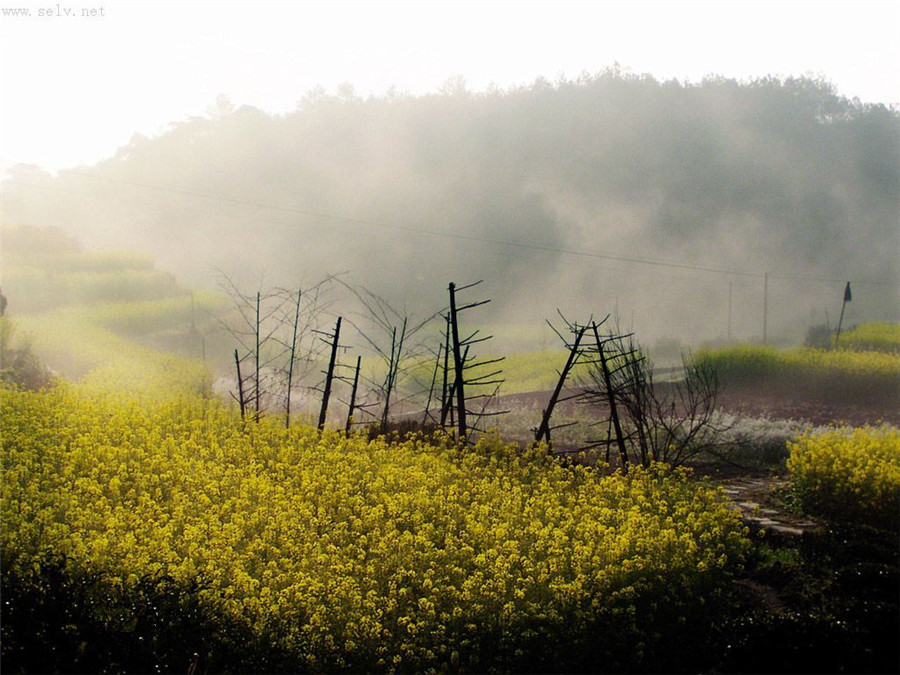
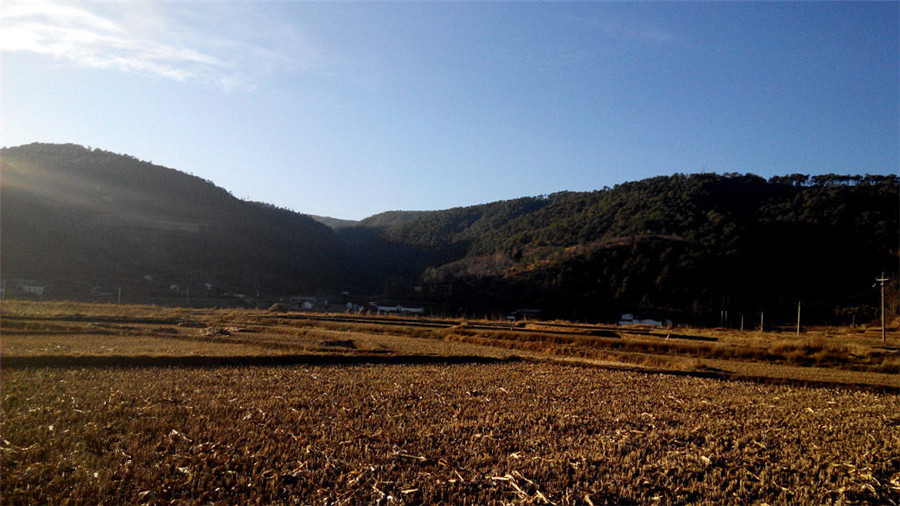
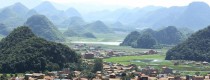
Jiuhe Bai Autonomous Township is rich in natural and cultural landscapes. It features beautiful pastoral scenery, with golden rice fields and rice field fish (rice flower fish) as local specialties. Additionally, historical sites such as the former site of the Wenchang Palace (文昌宫), which opened a private school in 1910, can be found in the area.