
 7 Days GolfingTour
 8 Days Group Tour
 8 Days Yunnan Tour
 7 Days Shangri La Hiking
 11 Days Yunnan Tour
 6 Days Yuanyang Terraces
 11 Days Yunnan Tour
 8 Days South Yunnan
 7 Days Tea Tour
 8 Days Muslim Tour
 12 Days Self-Driving
 4 Days Haba Climbing
 Tiger Leaping Gorge
 Stone Forest
 Yunnan-Tibet
 Hani Rice Terraces
 Kunming
 Lijiang
 Shangri-la
 Dali
Dali
 XishuangBanna
 Honghe
 Kunming
 Lijiang
 Shangri-la
 Yuanyang Rice Terraces
 Nujiang
 XishuangBanna
 Spring City Golf
 Snow Mountain Golf
 Stone Mountain Golf











 What Our Customers Say?
 alt="Market Days in Menglian and Townships, Puer"
/>
alt="Market Days in Menglian and Townships, Puer"
/>
Raw Pu-erh Tea (Shengcha or Sheng Puerh)
Pu’er raw tea refers to tea made from Yunnan large-leaf sun-dried green tea leaves, which is naturally aged without artificial fermentation or piling. It includes various types of Yunnan tea such as cake tea, brick tea, tuo tea, and dragon pearl tea. Pu’er grows in subtropical and tropical mountain forests at altitudes of 1200–1400 meters. It is also found in northern Vietnam, Thailand, Myanmar, and India.
Origin
Pu’er tea is primarily produced in Yunnan Province, China, with key areas being Baoshan City, Lincang City, Pu’er City, and Xishuangbanna Dai Autonomous Prefecture. It grows in subtropical and tropical mountain forests at altitudes of 1200–1400 meters. In addition to China, it is also found in northern Vietnam, Thailand, Myanmar, and India. Wild tea trees (including cultivated wild tea trees), also known as Pu’er tea, are distributed in southern Yunnan and Hainan. In Yunnan, there is a “Tea Tree King” with a history of over 1800 years, which is a large plant. Despite local protection efforts, these plants are still subject to human interference and could face destruction if not properly managed. As the population in Yunnan increases, natural forests are rapidly shrinking, and the number of people picking wild tea leaves before and around the Qingming Festival each year is growing, leading to a decline in wild tea trees.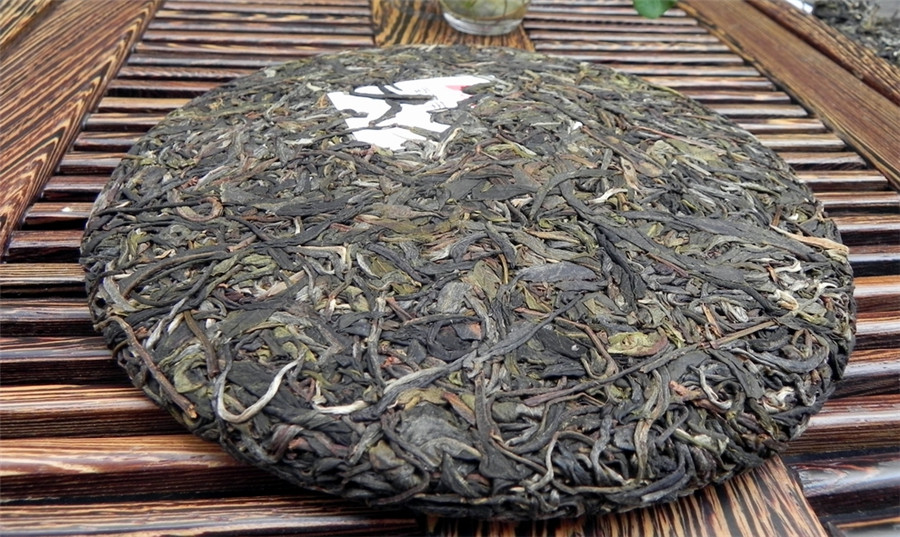
Grades
- Special Grade: Over 70% one bud one leaf, and under 30% one bud two leaves.
- Grade One: Over 70% one bud two leaves, and under 30% other buds and leaves of similar tenderness.
- Grade Two: Over 60% one bud two or three leaves, and under 40% other buds and leaves of similar tenderness.
- Grade Three: Over 50% one bud two or three leaves, and under 50% other buds and leaves of similar tenderness.
- Grade Four: Over 70% one bud three or four leaves, and under 30% other buds and leaves of similar tenderness.
- Grade Five: Over 50% one bud three or four leaves, and under 50% other buds and leaves of similar tenderness.
 Jingmai Ancient Tea Mountain in Lancang County, Puer
Production
Raw tea is made from fresh tea leaves that are spread out to evaporate naturally. It undergoes a process of pan-frying, rolling, and drying before being naturally aged without piling or fermentation.
The production of Pu’er raw tea leaves generally involves the following steps:
- Withering: Fresh leaves are spread out to lose some moisture, which helps form some aromatic compounds during this stage.
- Kill-green: The processing material for Pu’er raw tea is sun-dried green tea from Yunnan large-leaf tea plants. Due to the high moisture content of large-leaf tea, it is often pan-fried and steamed to ensure even moisture loss, which is beneficial for rolling the leaves into shape.
- Rolling: The purpose of rolling is to break the surface structure of the leaves and rupture some leaf cells to ensure that tea juice is fully extracted during brewing. It is also an important shaping process that gives the tea leaves a tight, curved appearance and affects the internal quality. After rolling, the leaves are separated from clumps and flakes and left to rest.
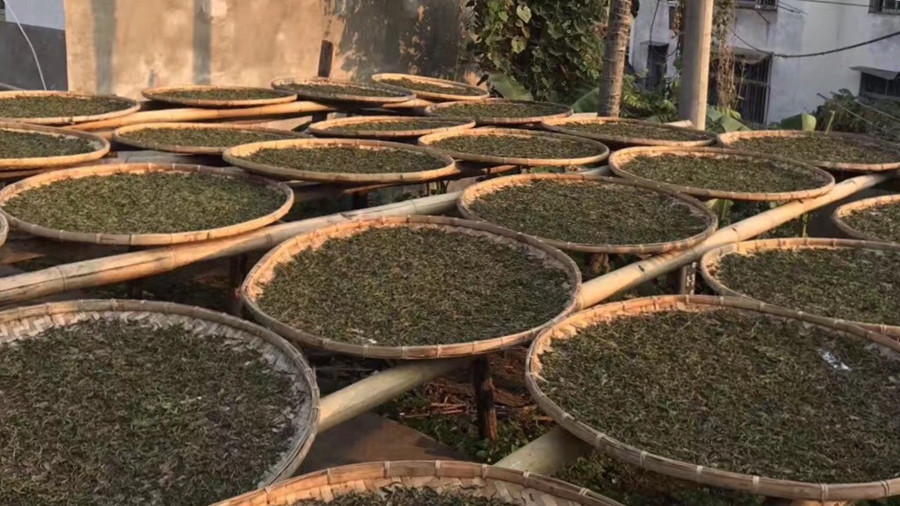
- Sun-drying: The rolled tea leaves are naturally dried under the sun, preserving the organic and active substances in the tea. The color of the tea changes significantly during this step, turning into the familiar gray-black color.
After these four steps, the raw tea leaves are completed. With unique processing techniques, they are then transformed into full-fledged Pu’er raw tea.
Brewing
When brewing Pu’er raw tea, it is recommended to use soft water such as purified water, mineral water, or tap water that meets drinking water standards. If good mountain spring water is available locally, that would be ideal. High-quality spring water should meet the six elements of “clear, light, sweet, active, clean, and cool.” Clear means transparent and pure, light refers to high surface tension, sweet means pleasantly sweet, active indicates live water rather than stagnant, clean means free of pollution, and cool means cold.
The water temperature is crucial for brewing Pu’er raw tea. It should be 100°C (boiling water) to ensure proper extraction of aroma and flavor. When using a gaiwan, about 8 grams of tea leaves and 150-200 milliliters of water is recommended. The tea-to-water ratio should be between 1:50 and 1:30 for a purer tea aroma. It is essential to rinse the tea first, pouring out the boiling water immediately after the first infusion to avoid affecting the taste. Rinsing can be done once or twice quickly. For the formal brewing, pour the tea into a fairness cup after about 5 seconds, and continue to steep the leaves. As the number of infusions increases, the steeping time can be gradually extended from one minute to several minutes to ensure a more even tea flavor.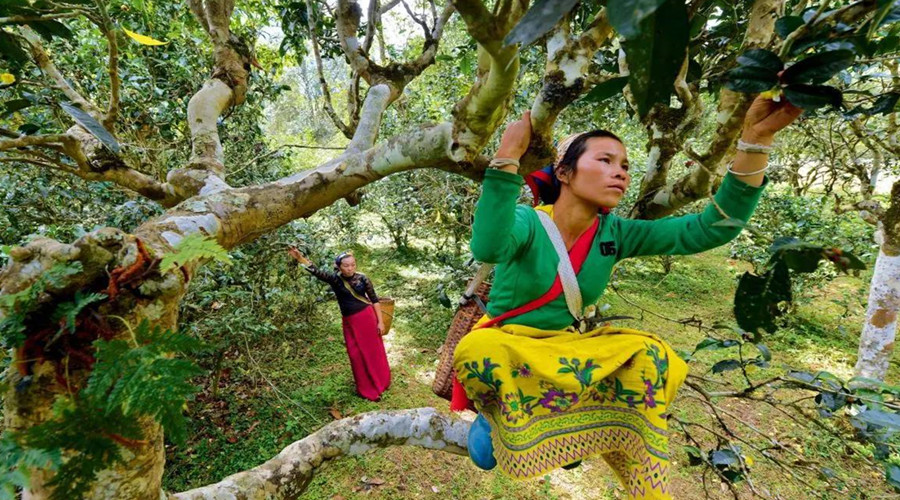
Storage
The unique qualities and aging aroma of Pu’er tea are developed during the aging process. Over time, the main chemical components in Pu’er raw tea, such as polyphenols, amino acids, and sugars, undergo changes, resulting in an ideal color and flavor. Storing Pu’er tea is not difficult, as long as it is kept away from direct sunlight, rain, and is maintained in a clean, dry, and ventilated environment without other odors.
For Pu’er raw tea that will be consumed within a year or so, normal storage conditions (ventilated, natural, no odor, and not damp) are sufficient. For high-quality Pu’er raw tea intended for long-term storage, the storage environment needs more attention. If you have a dedicated tea room, you likely already know the necessary details. For ordinary individuals without a special storage environment, storing Pu’er raw tea at home is manageable if the tea is packed in bamboo leaves, as it naturally ventilates and protects the tea’s aroma over time. If the tea is individually wrapped with just paper, it is advisable to place it in a breathable cotton or linen bag or a tea box to prevent the aroma from fading over time.
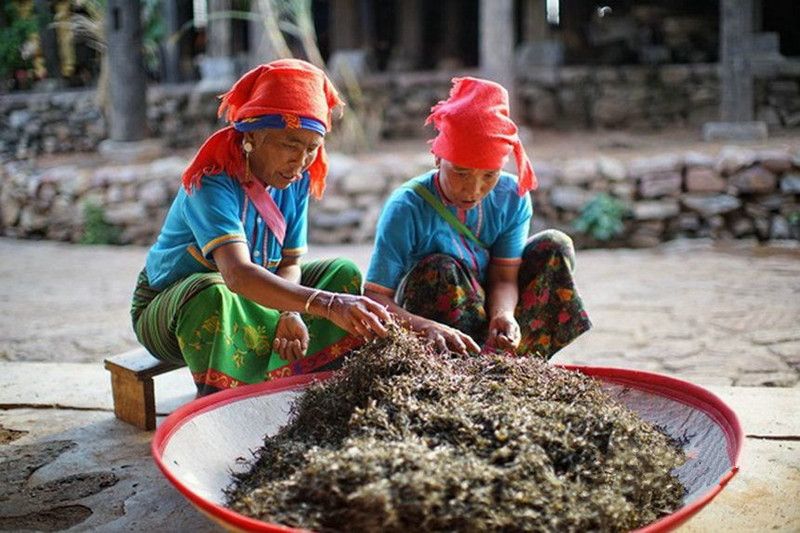 Jingmai Ancient Tea Mountain in Lancang County, Puer
Practical Experience
Storing Pu’er raw tea in environments with poor ventilation, high humidity, such as cellars, bunkers, or earthen houses, can lead to increased relative humidity in the air, fostering the growth of mold and accelerating aging. This type of mold oxidation is known as wet storage fermentation.
Difference Between Raw and Ripe Tea
- Raw Tea: Raw tea is made from fresh tea leaves that are naturally aged without fermentation. Raw tea is more intense and stimulating, with a strong tea flavor and astringency when newly processed or aged for a short time. The tea liquor is usually lighter or yellow-green. Raw Pu’er is somewhat better for weight loss but can be harsher on the stomach. Long-term consumption of raw tea is not recommended.
- Ripe Tea: Ripe tea undergoes a fermentation process during production, making it milder. After the successful development of the piling fermentation method by the Menghai Tea Factory and Kunming Tea Factory in 1973, the tea bricks produced by Kunming Tea Factory that year, with their golden, smooth tea liquor and rich date flavor, were highly praised by Pu’er tea enthusiasts. Ripe Pu’er has a smooth, mellow tea character with a rich, fragrant taste, making it more suitable for daily consumption.

