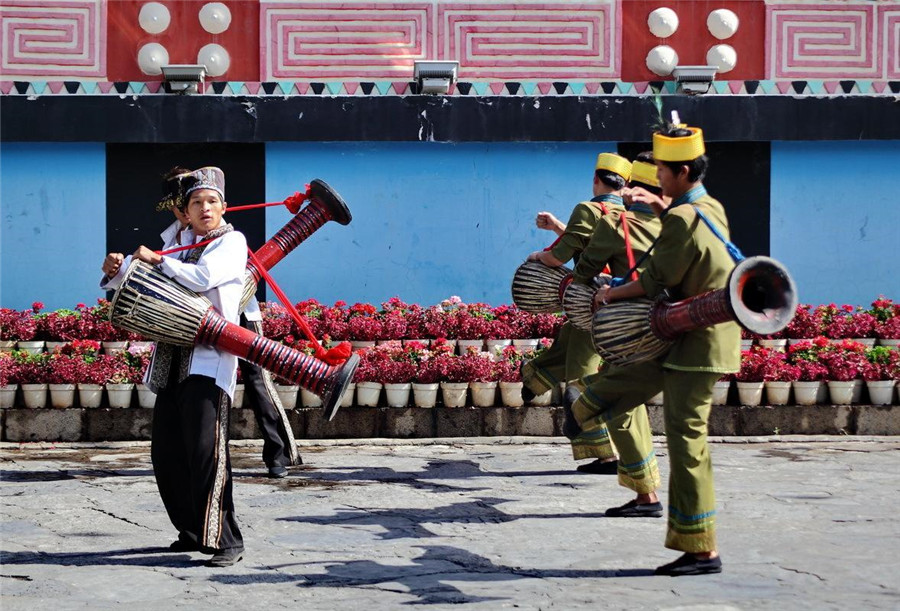
Elephant-foot Drum Dance of Dai Ethnic Minority in Yingjiang County, Dehong

Elephant-foot Drum Dance of Dai Ethnic Minority in Yingjiang County, Dehong

The Elephant-Foot Drum Dance (布朗族象脚鼓舞) is a traditional dance of the Blang ethnic group (布朗族) in Yunnan Province. It is recognized as an intangible cultural heritage item. The dance was submitted for heritage listing by Menghai County (勐海县), Xishuangbanna Dai Autonomous Prefecture (西双版纳傣族自治州), with the Menghai County Cultural Center (勐海县文化馆) as the recommending protection unit. On June 16, 2022, it was included in the public list of recommended projects for Yunnan Province’s fifth batch of provincial-level intangible cultural heritage representative projects.

Originating from traditional Blang folk dance, the Elephant-Foot Drum Dance is characterized by passionate, steady, and graceful movements. It has high artistic value, is beloved by the local people of Xishuangbanna, and has also gained recognition both domestically and internationally.

Heritage Transmission and Protection

On June 16, 2022, the Elephant-Foot Drum Dance was officially listed as a recommended project in Yunnan’s fifth batch of provincial-level intangible cultural heritage.

This dance is popular among multiple ethnic groups in Yunnan, including the Dai (傣族), Jingpo (景颇族), Achang (阿昌族), Deang (德昂族), Wa (佤族), and Blang (布朗族). It is a male recreational dance, named after the elephant-foot drum worn by the dancers.

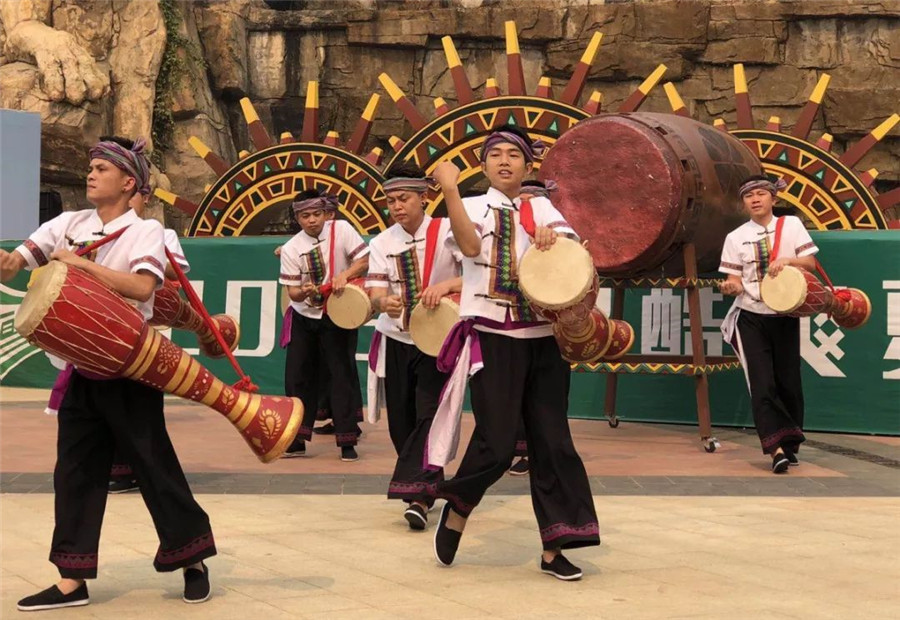
The elephant-foot drum is crafted from hollowed trunks of mango or kapok trees and covered with cowhide. Its shape resembles an elephant’s foot. There are three main sizes:

  • Large drums: about 1.7 meters long
  • Medium drums: about 1 meter long
  • Small drums: about 0.7 meters long

Different drum sizes correspond to distinct dance styles:

  • Large Elephant-Foot Drum Dance: dignified and elegant, with slow steps and varied drumming techniques, producing rich rhythms.
  • Medium Elephant-Foot Drum Dance: steady and powerful, featuring wide movements and techniques such as swinging, turning, and leg tricks.
  • Small Elephant-Foot Drum Dance: agile and lively, known for leaps and duels, often performed in competitions.

Basic Overview

The Elephant-Foot Drum Dance is one of the most widespread and iconic Dai (傣族) dances. Its name derives from the dancers wearing elephant-foot-shaped drums while performing.

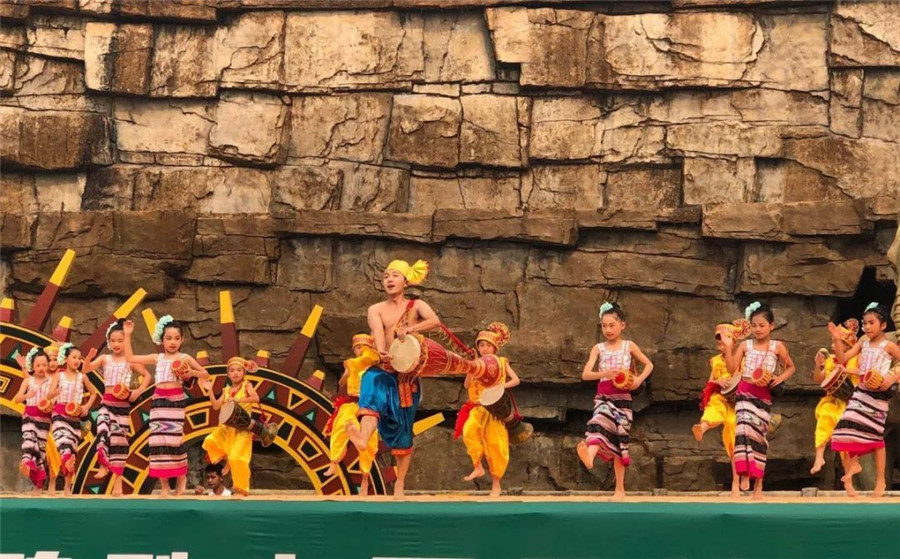
In Dai cultural life, the dance occupies an important role. During leisure time, festivals, or drumming competitions, young men carrying elephant-foot drums gather to perform. Wherever the sound of the elephant-foot drum is heard, there is joy and festivity.

The Dai people divide the drums into three types: long, medium, and short. For example, long-drum dances may include playful tricks, such as striking the drum to unfasten and then refasten buttons in rhythm.

In Dai performance tradition, the drum rhythm can act as “drum language”, guiding dancers. For instance, when the drum beats “yue bing beng, yue bing beng, yue bing yue li li,” it signals Peacock Dance performers to lift their “wings.”

Cultural Characteristics

Dai dances are diverse, including group dances, solo dances, paired dances, and instrument dances. In terms of content, they portray animals and daily life, with the Peacock Dance and the Elephant-Foot Drum Dance being the most renowned.

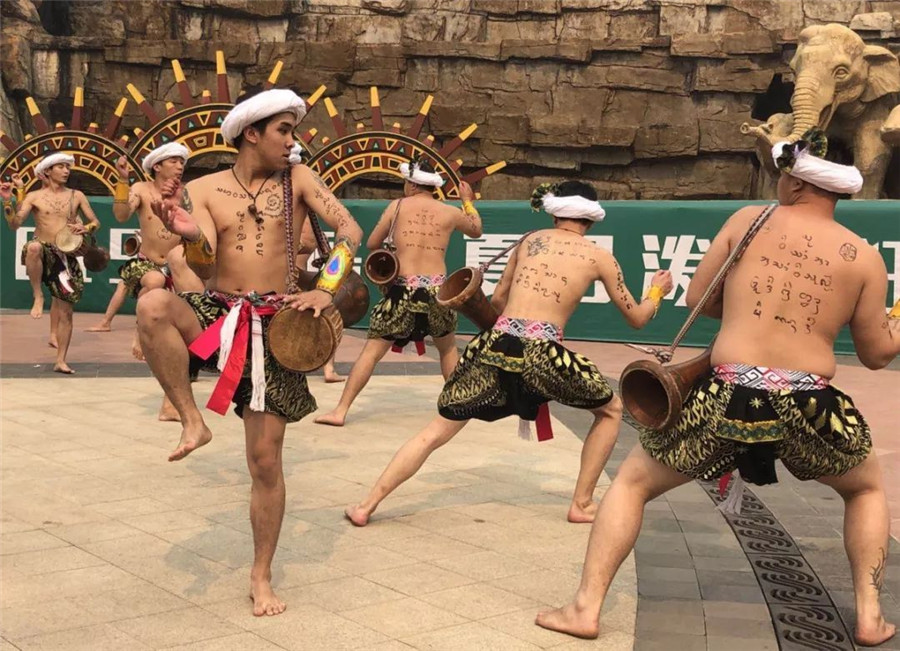
The Elephant-Foot Drum Dance is defined by strong rhythm and bodily coordination: drumming hands, stomping legs, expanding and contracting the chest, shrugging shoulders, and bending or straightening the torso—all in set rhythmic patterns.

  • Small drum dances: agile and competitive, often involving drum duels. Victory is claimed by kicking the opponent or snatching their headscarf.
  • Medium drum dances: steady and robust, evaluated based on drumming rhythm and drum-tail movements.
  • Large drum dances: powerful in sound, mainly serving as accompaniment in group dances with simpler choreography.

Drumming is mainly done with the right hand, while the left hand presses the drum surface for variation. The Elephant-Foot Drum Dance remains one of the most popular and communal ethnic dances in Yunnan, often performed after rice transplanting or during festivals.

Variants by Drum Size

Long Elephant-Foot Drum Dance

  • Drum length: about 1.7 meters
  • Popular in Ruili (瑞丽), Mengding (孟定), and Menglian (孟连县)
  • Dance: dignified, graceful, with multiple drumming techniques (finger, palm, fist, elbow, even foot or head).
  • Ruili preserves nearly 20 complete drum scores, which serve both musical and choreographic functions.

Medium Elephant-Foot Drum Dance

  • Drum length: about 1 meter
  • Popular in Luxi (潞西), Yingjiang (盈江), Longchuan (陇川), Shuangjiang (双江), Gengma (耿马), Cangyuan (沧源), Jinggu (景谷) and other regions.
  • Dance: solid and vigorous, with large-scale movements. Each ethnic group has unique variations.
  • Dai version includes swinging, turning, and leg tricks, featuring the “three bends” posture.
  • Jingpo version: performed in pairs, with shifting positions and dramatic drum movements.
  • Achang version: bold, hearty, and lively.

Small Elephant-Foot Drum Dance

  • Drum length: about 0.7 meters
  • Unique to Xishuangbanna (西双版纳) Dai.
  • Dance: nimble and acrobatic, centered on drum duels and competitions.
  • Victory is claimed by capturing the opponent’s headscarf or hat.

Origins and Legends

According to Dai folklore, the elephant-foot drum originated from a battle against a flood-causing dragon. After slaying the dragon, villagers crafted a drum from its hide, modeled after the auspicious elephant’s foot, to celebrate victory and symbolize hope. Since then, the drum has embodied both joy and resistance against misfortune.

The instrument evolved with colorful decoration, peacock feathers, and sticky rice balls pressed onto the drum surface to enrich its tone. It became not only a dance prop but also a musical instrument capable of “drum speech.”

Ethnic Affiliation

The Elephant-Foot Drum Dance belongs to the Dai ethnic group (傣族), mainly residing in:

  • Xishuangbanna Dai Autonomous Prefecture (西双版纳傣族自治州)
  • Dehong Dai and Jingpo Autonomous Prefecture (德宏傣族景颇族自治州)
  • Gengma Dai and Wa Autonomous County (耿马傣族佤族自治县)
  • Menglian Dai, Lahu, and Wa Autonomous County (孟连傣族拉祜族佤族自治县)

The Dai people have a long history, documented as early as the 1st century CE in Chinese records. They possess their own script (four main versions derived from Indian scripts), practice Theravāda Buddhism, and celebrate traditional festivals such as the Water-Splashing Festival (泼水节), which marks the Dai New Year with rituals, dancing, and joyful water play.

Their bamboo houses, distinctive dress, rice-based cuisine (notably bamboo tube rice), and Pu’er tea (普洱茶) culture highlight their deep connection to both agriculture and nature.

Related Categories