7 Days GolfingTour
 8 Days Group Tour
 8 Days Yunnan Tour
 7 Days Shangri La Hiking
 11 Days Yunnan Tour
 6 Days Yuanyang Terraces
 11 Days Yunnan Tour
 8 Days South Yunnan
 7 Days Tea Tour
 8 Days Muslim Tour
 12 Days Self-Driving
 4 Days Haba Climbing
 Tiger Leaping Gorge
 Stone Forest
 Yunnan-Tibet
 Hani Rice Terraces
 Kunming
 Lijiang
 Shangri-la
 Dali
Dali
 XishuangBanna
 Honghe
 Kunming
 Lijiang
 Shangri-la
 Yuanyang Rice Terraces
 Nujiang
 XishuangBanna
 Spring City Golf
 Snow Mountain Golf
 Stone Mountain Golf












Pu-erh Tea in Yunnan
The six famous tea mountains are a group of mountains in Xishuangbanna that are renowned for their climates and environments, which not only provide excellent growing conditions for Pu-erh, but also produce unique taste profiles (akin to terror in wine) in the produced pu-erh tea.
Pu-erh tea, known as “dark tea” or “black tea” in China, is a semi-rare type of tea that is made in Yunnan, China. In the West, pu-erh tea is known for its health benefits. 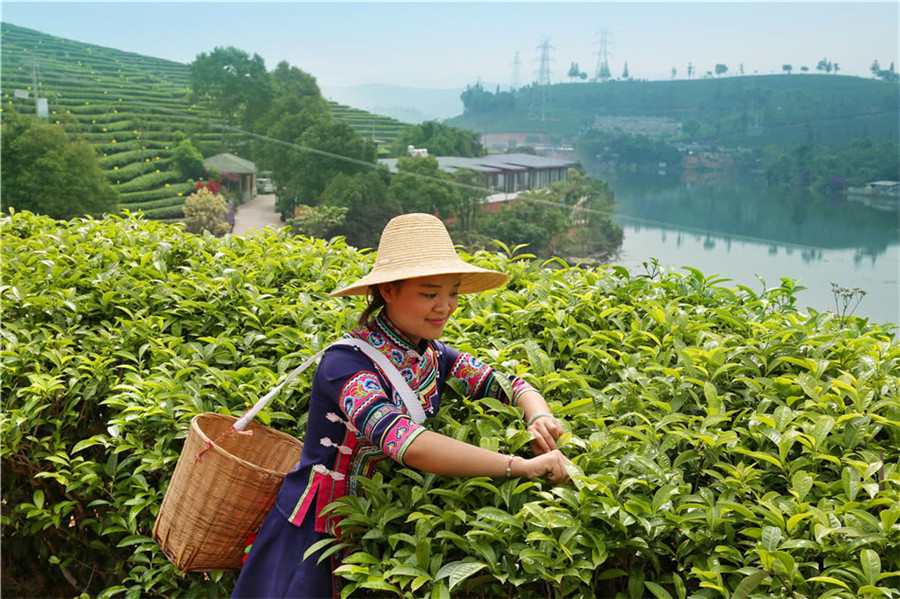
One of the more distinctive characteristics of pu-erh tea is in many shapes. Pu-erh commonly comes in shaped forms, such as bricks, cakes (which are disc-shaped and also known as “bing cha”) and “tuo cha” (which are shaped like tiny bowls). These shapes make the transport and storage of pu-erh convenient.
In traditional Chinese herbalism, pu-erh tea is considered to open the meridians, “warm the middle burner” (the spleen and stomach) and be beneficial to “blood cleansing” and digestion. For these reasons, it is often consumed after heavy meals or drunk as a hangover cure / preventative. Some studies have shown that pu-erh may lower cholesterol, lower blood pressure and increase metabolism.