7 Days GolfingTour
 8 Days Group Tour
 8 Days Yunnan Tour
 7 Days Shangri La Hiking
 11 Days Yunnan Tour
 6 Days Yuanyang Terraces
 11 Days Yunnan Tour
 8 Days South Yunnan
 7 Days Tea Tour
 8 Days Muslim Tour
 12 Days Self-Driving
 4 Days Haba Climbing
 Tiger Leaping Gorge
 Stone Forest
 Yunnan-Tibet
 Hani Rice Terraces
 Kunming
 Lijiang
 Shangri-la
 Dali
Dali
 XishuangBanna
 Honghe
 Kunming
 Lijiang
 Shangri-la
 Yuanyang Rice Terraces
 Nujiang
 XishuangBanna
 Spring City Golf
 Snow Mountain Golf
 Stone Mountain Golf














Lancang County
Lancang County Overview
Chinese Name: 澜沧县 English IPA: Lan Cang Xian Location: Southwest Yunnan Population (city): 494,800 Language: Southwest Mandarin, Lahu Language Zip code: 665600 Tel code: (+86) 0879 Time zone: UTC+8
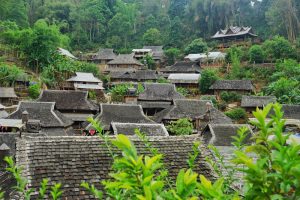
Lancang Lahu Autonomous County (澜沧拉祜族自治县) is one of the counties under the jurisdiction of Pu’er City, Yunnan Province. The county is located in the southwestern part of Yunnan Province. It is named after the Lancang River in the east. With a total area of 8,807 square kilometers, the county is the second largest county in Yunnan Province with the boundary line of 80.563 kilometers. The seat of Lancang County is Menglangba at the sea level of 1,054 meters.
Highlights
- Long History: Before 109 BC, the present Lancang County was the southern boundary of the ancient Dai Country “Mengdaguang(勐达光)”(Ailao Country in Chinese).
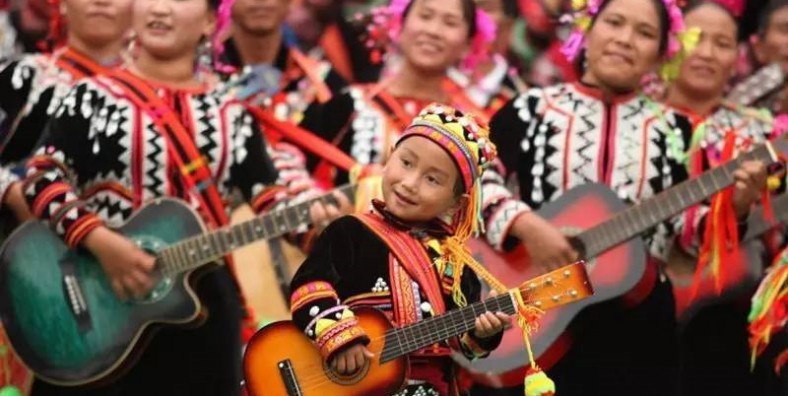
- Multi-ethnic Settlement: In Lancang County, there are many ethnic groups, including Lahu, Hani, Yi, Han.
- Abundant Resources: It is abundant in water resources, land resources, biological resources, mineral resources.
Other Destinations in Lancang County
Lancang County Attractions
What to Visit in Lancang County Lancang Lahu Autonomous County (澜沧拉祜族自治县) is an autonomous county under the jurisdiction of Pu'er City, in southwest Yunnan Province, China. Lancang is the same as Lan Cang, and refers to the Mekong River (known in China as the Lancang) on its eastern borders and adopted by modern Laos, a Tai word meaning Million Elephants.Within the territory, there are over 10 scenic plots such as Lahu Fengqing Park(拉祜风情园), Xiaolushan Viewing Platform(小庐山观景台), Laodabao(老达保), Fengmiyan Viewing Platform(蜜蜂岩观景点), Nuozhadu Scenic Area(糯扎渡旅游风景区) [...]
More Lancang County Attractions >>
Lancang County Tours
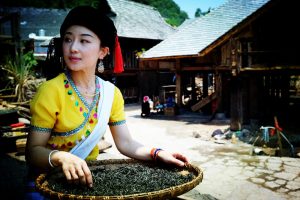
When you traveling Pu’er, Lancang County is a good place to be put on your list. It can be joined in whatever your Pu’er tour or Yunnan Tour. Come to Lancang Pu’er, take XishuangBanna and Puer Tea Culture Tour with Qianjiazhai Ancient Tea. If you prefer, contact our consultant and we can adjust the itinerary of our prearranged routes or we can just tailor-make your own kind of Lancang County Pu'er Tour. [...]
Climate & When to Go
Climate in Lancang County Lancang County is located in the south of the Tropic of Cancer. The climate mainly belongs to the mountainous region monsoon climate of the south subtropics without hot summer and cold winter. The rainfall is abundant, the sunshine is sufficient, and the dry and rainy seasons are obvious. Due to the complex topography and geomorphology and large altitude difference, and the three-dimensional climate is obvious. The valley regions of the Lancang River, Xiaoheihe River and Heihe River, [...]
More Lancang County Climate & When to Go >>
Transportation
How to Get to Lancang County 1. By Air Lancang Jingmai Airport is located in Donggang Village and Huilong Village, Donghui Town, southwest of Lancang County, 30 kilometers away from the seat of Lancang County and 30 kilometers away from Menglian County. There are flights from Kunming, Chongqing, Shanghai, etc. 2. By Train Pu'er Railway Station is the middle station of the Yumo Railway under construction and an important station for the Laos section of the Trans-Asian Railway. It is expected to be put into use by 2020. 3. By Long-distance Bus In [...]
More Lancang County Transportation >>
Festivals and Activities
In Lancang County, there are many ethnic groups, including, Hani, Lahu, Wa and Yi. Of course, the festivals and activities are diverse. 1. Hulu Festival(葫芦节) The Hulu Festival is a grand festival of the Lahu people. On the 15th October of the lunar calendar every year, the Lahu people dress in festive costumes, singing and dancing, with their own wine and glutinous rice dumplings, killing pigs and slaughtering chickens, concentrate in the villages. 2. Kuota Festival of Lahu (拉祜族扩塔节) Kuota, means New Year in Lahu language, commonly known [...]
More Lancang County Festivals and Activities >>
Travel Tips
1. Useful Numbers of Lancang County Fire: 119 Police: 110 Ambulance: 120 Weather Forecast: 121 Consumer Complaint: 12315 Telephone Number Inquiry: 114 2. Post Offices in Lancang County Lancang Lahu Autonomous County Post Office(澜沧拉祜族自治县邮政局) Add: Menglang Street, Menglang Town, Lancang Lahu Autonomous County (澜沧拉祜族自治县勐朗镇勐朗街) Tel: 0879-7222758 3. Banks in Lancang County You can use your credit card, traveler's check or cash to exchange for Chinese Yuan in some branches of Bank of China in Lancang County. China Postal Savings Bank(中国邮政储蓄银行) Add: Menglang Street, Menglang Town, Lancang Lahu Autonomous County (澜沧拉祜族自治县勐朗镇勐朗街) Tel: 0879-7221015 4. [...]
More Lancang County Travel Tips >>
Useful Maps
If we go to somewhere new, maps are good facilitators for us. In order to show you clear direction and location, Maps of Lancang in Pu’er provide you some useful maps like Region Map of Lancang County in Pu'er, Tourist Attractions Map of Lancang County in Pu'er, Location Map of Lancang County in Pu'er Yunnan, etc. [...]
More Lancang County Useful Maps >>
Lancang County Accommodation
Where to Stay in Lancang County Lancang County is a county under the jurisdiction of Pu'er City, Yunnan Province, China. There are many hotels around Lancang County. Yunnan Exploration will provide the best hotels for you. The recommended hotels are as follows: 1. Lancangxiangyun Hotel(澜沧祥云大酒店) Add: South Huancheng Road, Lancang Lahu Autonomous County (澜沧拉祜族自治县环城南路) Tel: 0879-7533333 2. Hualong Hotel(华隆大酒店) Add: Minzu Street, Menglang Town, Lancang Lahu Autonomous County(澜沧拉祜族自治县勐朗镇民族街) 3. Xiaokang Hotel(小康宾馆) Add: Donglang Road, Lancang Lahu Autonomous County(澜沧拉祜族自治县东朗路) Tel: 0879-7227008 4. Lancang Yaju Business Hotel(澜沧雅居商务酒店) Add: Floor 1, Compensive Building, Jinfuwan, Fofang Road, Lancang Lahu Autonomous [...]
More Lancang County Accommodation >>
Other Hot Destinations in China
- Babao Town
- Baisha Ancient Town
- Baishuitai
- Baoshan Stone Town
- Bingzhongluo
- Dali Ancient Town
- Dashanbao
- Dongchuan Red Land
- Dulongjiang
- Feilaisi
- Haba Snow Mountain
- Heshun Ancient Town
- Honghe Hani Rice Terraces
- Jade Dragon Snow Mountain
- Jingmai
- Lashihai Lake
- Lijiang Ancient Town
- Lugu Lake
- Meili Snow Mountain
- Puzhehei
- Shuanglang Town
- Shuhe Ancient Town
- Stone Forest
- Three Parallel Rivers
- Tiger Leaping Gorge
- Yuanyang Hani Rice Terraces